
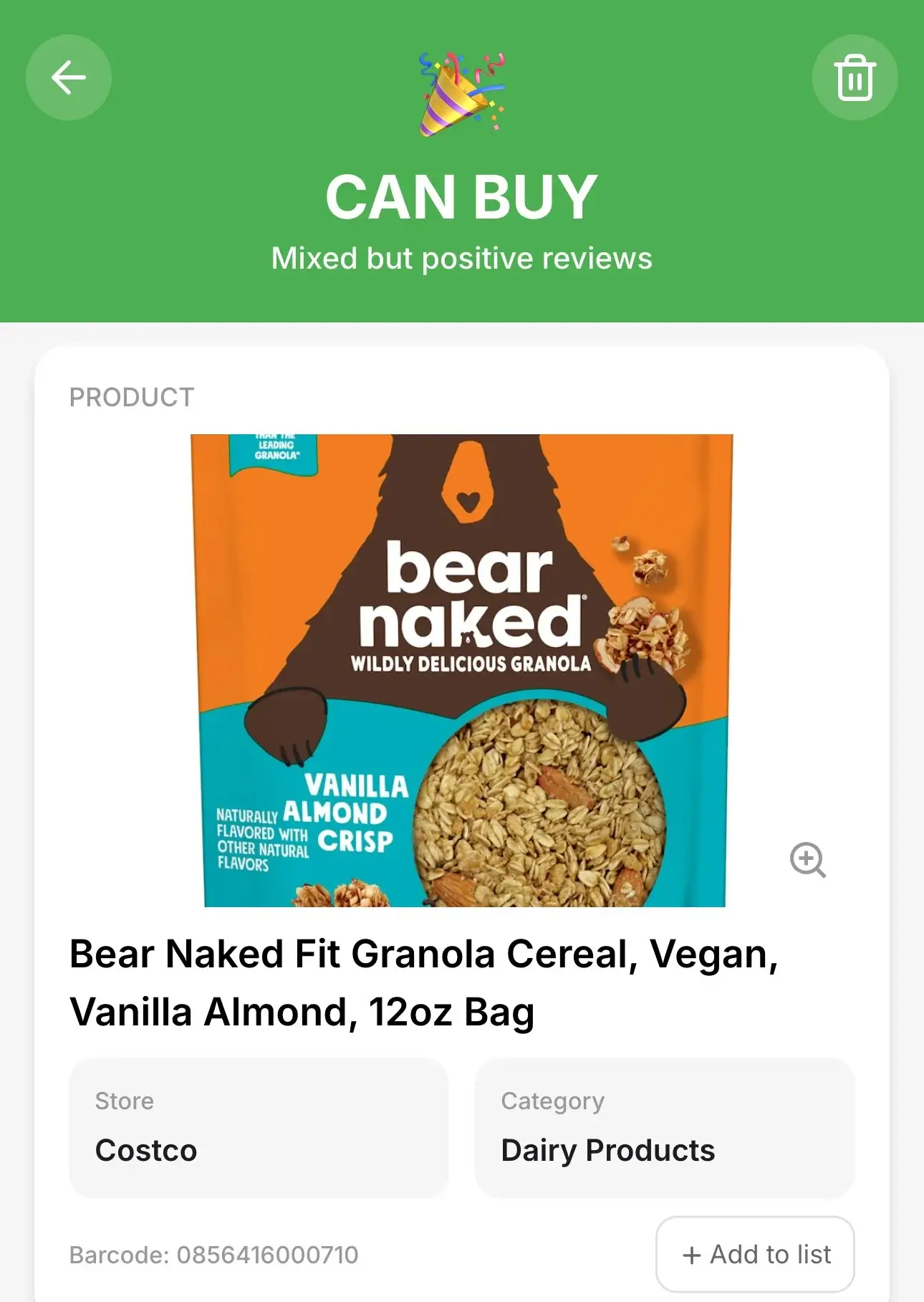
You're standing in the grocery aisle, staring at the yogurt shelf. That same blue cup from last time. And the thought: did we get this before? Did the kids actually like it? You pause. You grab it. At home, your youngest pushes it aside. Again.
This isn't a memory problem. It's a systems problem. And it's costing families far more than they realize.
Why we keep buying the wrong things
Human memory isn't built for detail. We remember impressions — good or bad — but rarely the specifics: what exactly and why. Especially when it comes to hundreds of routine decisions like "which cheese to get this week."
Add a shopping list, a kid in the cart, and a budget to track — and your brain simply can't keep up. It switches to autopilot: "looks familiar, probably fine." Psychologists call this optimism bias — we always expect things to go better than they did last time.
According to consumer psychology research, shoppers spend an average of 3–5 seconds choosing a product on the shelf. Without a rating system, your brain defaults to "looks like something we bought before" — regardless of whether anyone actually liked it.
Family coordination is its own challenge
The problem multiplies with every family member. You remember liking those oat crackers. What you forgot is that your partner found them too dry, and the kids refused them after the first try.
Every person in the family has different tastes — and no single person can realistically track everyone's preferences. Especially when you take turns shopping: whoever goes today doesn't know what was decided last week.
The mental load is unevenly distributed
Usually one parent carries the entire "grocery memory" of the family. They know the oldest won't touch peas, that the youngest only likes one brand of yogurt, that their partner can't stand anything spicy. When that person isn't around — all of that knowledge disappears.
Here's what it typically looks like:
- One parent is the sole keeper of product knowledge
- When anyone else shops, half the purchases end up wrong
- Kids refuse food that "everyone used to love"
- Money spent, groceries wasted
Amanda, a mom of two from Austin, TX, put it this way: "We were spending $40 a week on snacks nobody ate. Just because we couldn't remember they didn't work last time."
What actually works
The solution isn't training your memory. The solution is getting the information out of your head entirely. When a product rating is stored the moment someone tries it, you never have to rely on memory again.
That's exactly why we built Favory. The idea is simple: scan a product's barcode and tap one button — Not Tasty, OK, or Tasty. The rating is linked to that specific product and stored permanently. Next time you're at the store, scan it and see what the whole family thought. In 3 seconds.
Rate 5 products your family tried this week. Within a month, you'll have your own grocery database — and zero guesswork at the store.
What it looks like in practice
Michael, a dad of three from Toronto, told us: "Now the kids scan things themselves and leave their own ratings. They're genuinely into it. And we stopped arguing about whether to buy that yogurt again."
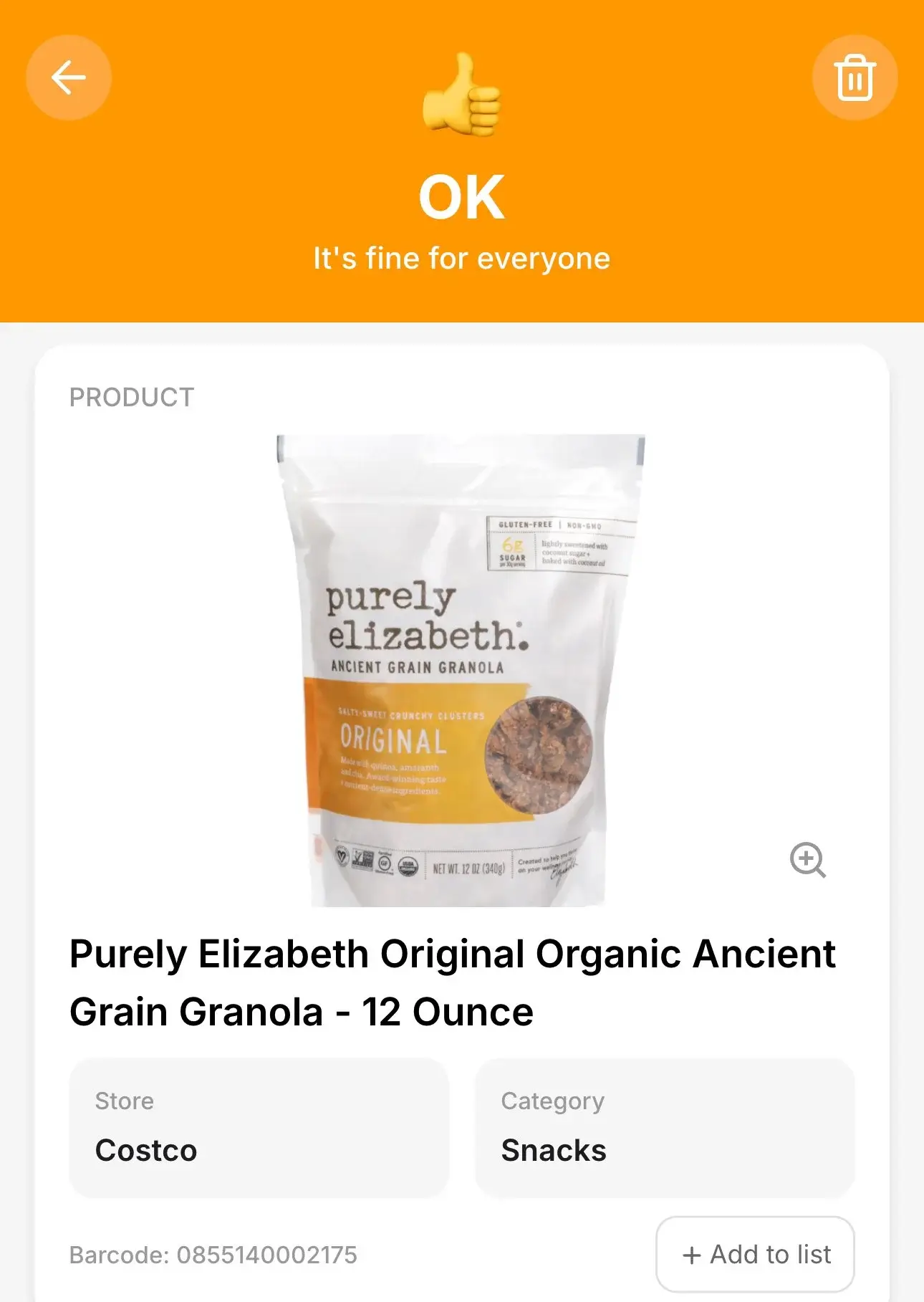
Here's what happens after a few weeks of using Favory:
- You walk into any store knowing exactly what will get eaten — and what won't
- Anyone in the family can do the shopping and get it right
- Less arguing, less wasted food, less money down the drain
- Kids are more invested in food choices — and more likely to eat what they picked
The compound effect over time
What starts as a small habit — rating a product after you try it — compounds into something powerful. After a few weeks, you have a reliable record of every family member's preferences across dozens of categories.
Shopping gets faster. You spend less. And you stop having that familiar moment of disappointment at home when you realize you grabbed the wrong thing again.
The goal isn't a perfect memory. It's a system that makes memory unnecessary.
What is a grocery app that remembers what your family likes?
Favory is a grocery app for families that lets you scan product barcodes right in the store, rate them, and see each family member's reaction. Instead of relying on memory or scribbling notes, you just scan — and get an instant answer: buy it or skip it.
Unlike a standard shopping list, Favory doesn't just remember what to buy — it remembers what your family actually likes. That's a fundamentally different thing.
- Barcode scanning — works with any packaged product in any store
- Per-person ratings — every family member has their own voice
- Instant verdict — Buy Again or Skip, based on real ratings
- Shared access — anyone in the family sees the same up-to-date info