
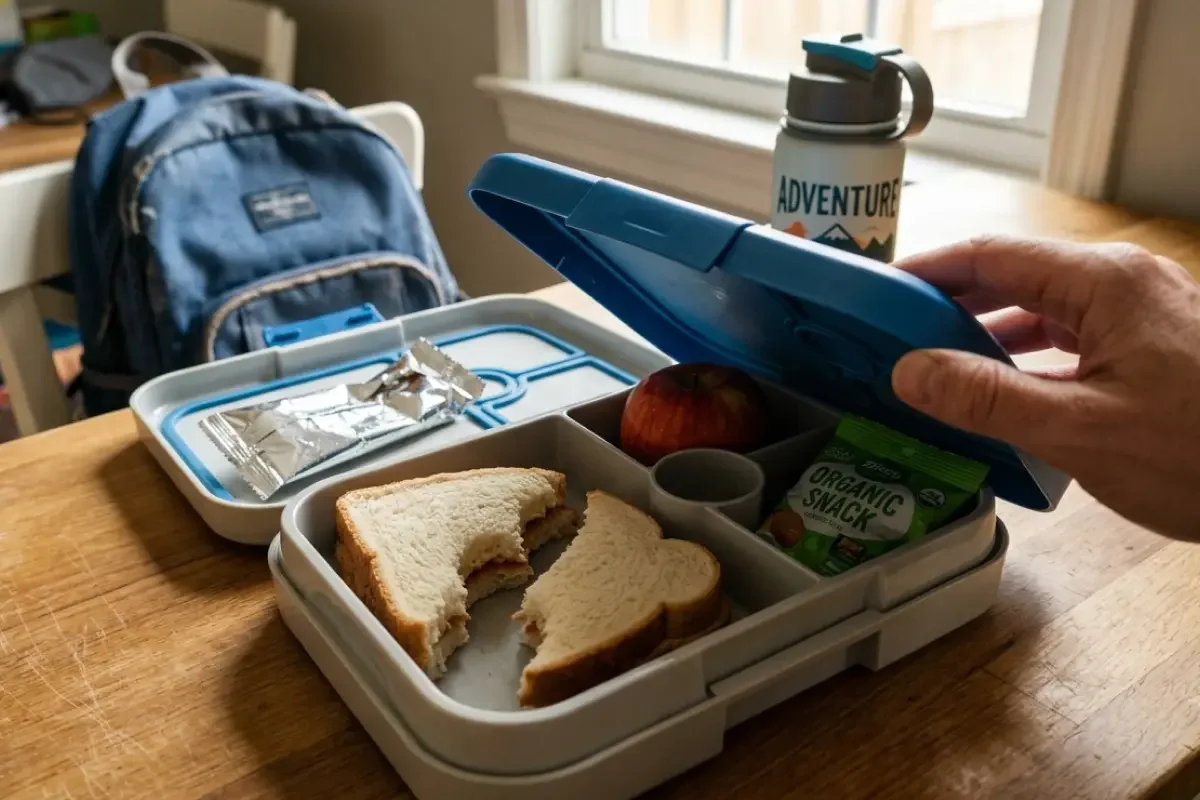
You pack the lunchbox in the morning. Sandwich, apple, crackers, something new you found at the store. You think: today they'll eat it.
Your kid gets home. You open the lunchbox. Sandwich half-eaten. Apple untouched. The new thing — never opened. Crackers gone, that's it.
Next day you pack the same thing. Because what else do you pack?
That's the real problem with school lunches for picky eaters: not a shortage of ideas — a shortage of feedback. You never really know what your child eats until you see what came back home.
Why you don't know what your child actually eats
An empty lunchbox isn't proof. A full one is obvious. But half-empty? That's a mystery.
My middle daughter came home with a half-eaten lunch for a month. I cut the portions — didn't help. Swapped the food — same thing. Turned out she was trading with a friend. What I packed "for her" was being eaten by another kid, and she was eating theirs.
I found out by accident, three weeks in. Three weeks of wrong conclusions and unnecessary changes.
A dad in our beta group described the same thing: his son came home with a nearly full lunchbox every day. Turned out he just didn't have time to eat — he ran around at recess the whole break. The fix wasn't the food: fewer components, everything finger food, nothing that needed to be opened or cut.
That's what no list on the internet will tell you. Because it's your kid, your school, your recess schedule.
How to figure out what your child actually eats
One question after school. Not "how was your day?" — "what's left in your lunchbox?"
I started writing it down in Notes. "Mia — quesadilla came back. Max — ate it." But within two weeks the notes turned into chaos. Impossible to find the right entry when you're standing in the grocery aisle trying to remember whether Max ate those crackers last month.
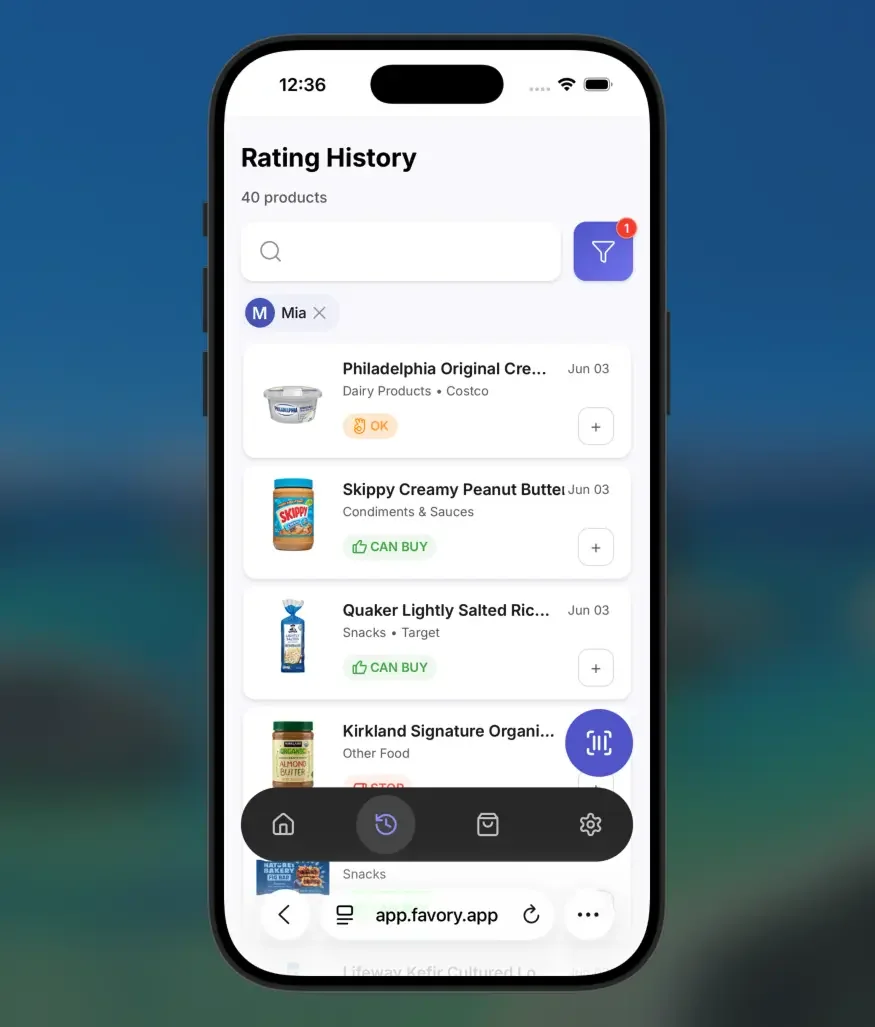
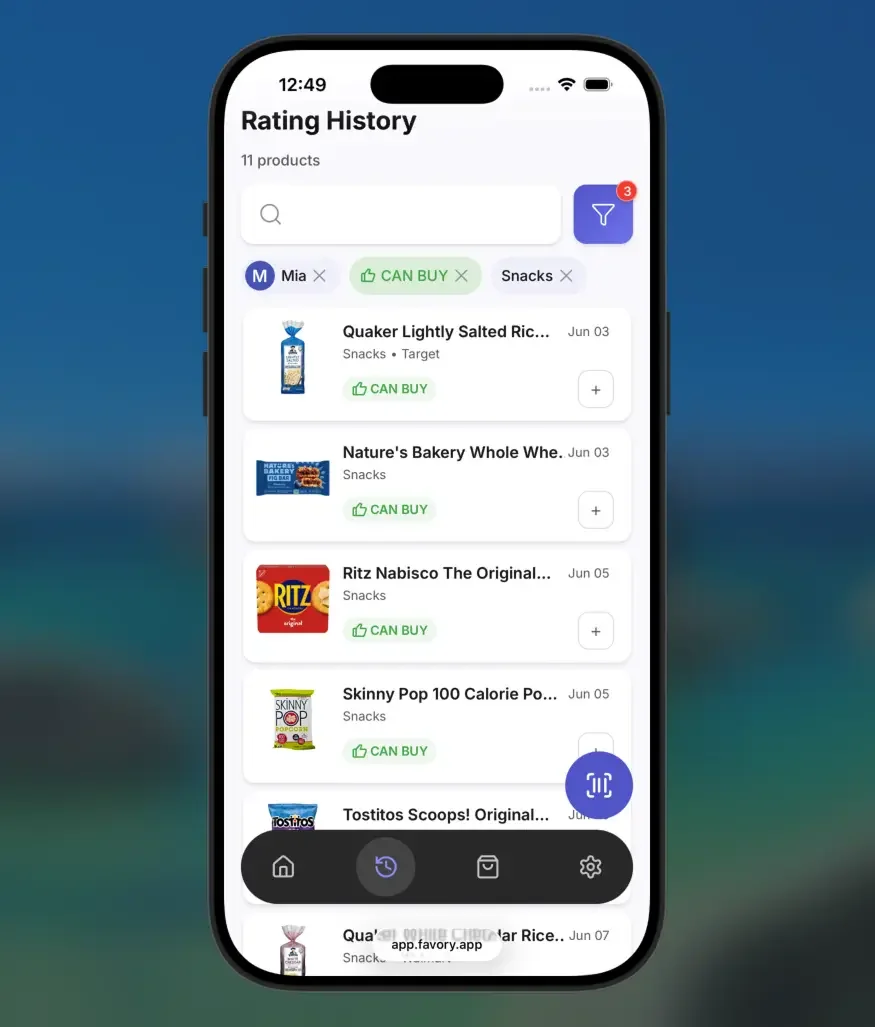
A few weeks in, we realized the problem wasn't the lunches. The problem was memory. We just couldn't remember which products worked for each kid — and we were starting from scratch every time. That's actually what Favory grew out of: an app where you scan a barcode and save a rating for each child separately. But even simple notes beat nothing, if you keep them consistently.
After a month, the picture got very clear: Mia finishes her cold quesadilla every time — Max always brings it back untouched. String cheese disappears with both of them, every time. Grapes only if cut — whole ones come back. Small details. But when you're packing 5 lunches a week, 40 weeks a year — these details determine whether your kid eats or walks in at 3pm starving and cleans out the snack cabinet.
After 2–3 weeks of tracking, it becomes obvious what your child eats "always," what they eat "sometimes," and what they'll never eat no matter how you pack it. And you can stop guessing.
School lunch ideas that picky eaters actually eat
Why predictability matters more than variety
PB&J works not because it's healthy or ideal. It's predictable. For many picky eaters, predictability matters more than variety — they know what's coming and they're not afraid to open the container.
String cheese works because the taste and texture barely change from package to package. That's rare for picky eaters — finding something that's "always the same."
Same reason crackers disappear more reliably than most things. Familiar texture, predictable crunch.
What parents notice after a few weeks of tracking
Once you start writing down what comes back, a pattern appears. There are "always" foods (disappear reliably), "sometimes" foods (depends on the day and mood), and "never" foods (come back no matter how you pack them). The list below is mostly the "always" and "sometimes" category — from our family and other parents we've worked with.
Sandwiches and wraps
- PB&J — cut the crusts. In a lot of families, the crust is the first thing that comes back home, even when everything else is eaten.
- Turkey & cheese roll-up — thinly sliced turkey is easier to chew than chunks. Nothing "wet" inside, no sauce.
- Butter sandwich — just butter. Some kids eat only this, and that's okay.
- Cream cheese bagel — mini bagel, plain version without add-ins.
- Cheese quesadilla — made at home, wrapped in foil. They'll eat it cold.
Protein
- String cheese — individually wrapped. Disappears reliably, partly because you can pull it into strips — for a lot of kids that ritual is part of what makes it appealing.
- Hard-boiled eggs — no sauce. If they refuse a whole one, try slicing it: a smaller piece lowers the threshold.
- Deli turkey or ham — rolled up, no seasoning.
- Hummus with pretzel crisps or baby carrots — hummus and crackers always separate, never pre-spread.
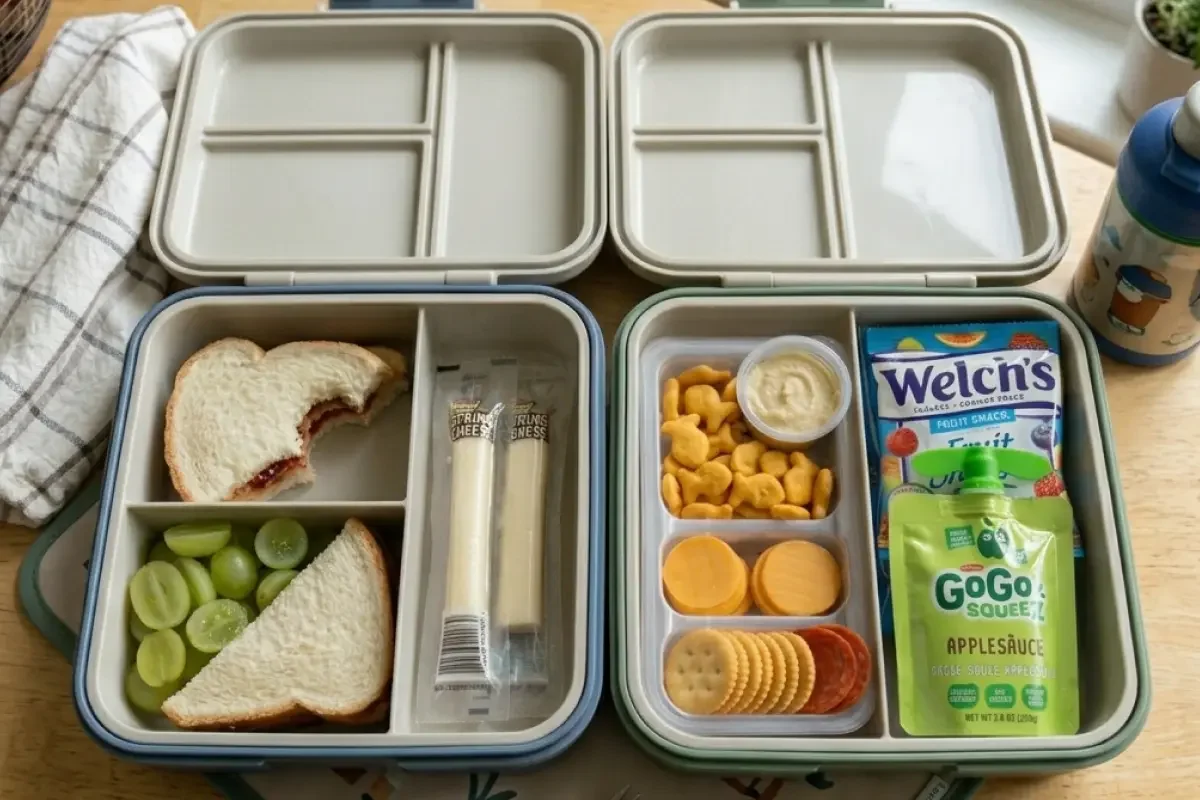
Cold lunches — a thermos changes everything
Most schools don't have microwaves. A thermos is one purchase that opens up an entire category of lunches. Before you pack: fill the thermos with hot water, let it sit 5 minutes, pour it out, then add the food — it'll hold heat for 4 hours.
What goes in: plain pasta with butter, rice, chicken nuggets, mac & cheese.
Without a thermos: cold quesadilla, roll-up, Lunchables. No judgment.
Snacks and fruit
- Baby carrots — in our experience some kids actually prefer them without dip because they're "not wet"
- Mandarins (Cuties or Halos) — easy to peel themselves, which matters: the child "opened" their own food
- Grapes — always cut in half
- Goldfish crackers, Ritz, Cheez-Its
- Applesauce pouch (GoGo Squeez)
For preschoolers and toddlers
Smaller portions, softer textures, nothing that needs to be opened or cut independently. For preschool-age kids especially: Banana slices, soft cheese cubes. Grapes — always cut in half: this is a safety rule in most US preschools, not just a preference. Sunflower butter + jam if the school is peanut-free, soft pasta without sauce, yogurt pouch. Many toddlers show the same pattern: if there's one unfamiliar element on the plate, they'll often refuse everything near it. Not always — but often enough to know going in.
For teens
Picky teen eaters are different: many of them care about looking "normal" in front of their friends. Cold pasta with olive oil and mozzarella, or a chicken wrap — the same meat and cheese as always, but it looks more grown-up. The shape changes, the contents don't.
Texture — the real reason lunch comes back
In our experience, texture causes more conflict than flavor. "Wet," "slimy," "mixed together," "touching another food" — these are real reasons kids refuse food, not just pickiness.
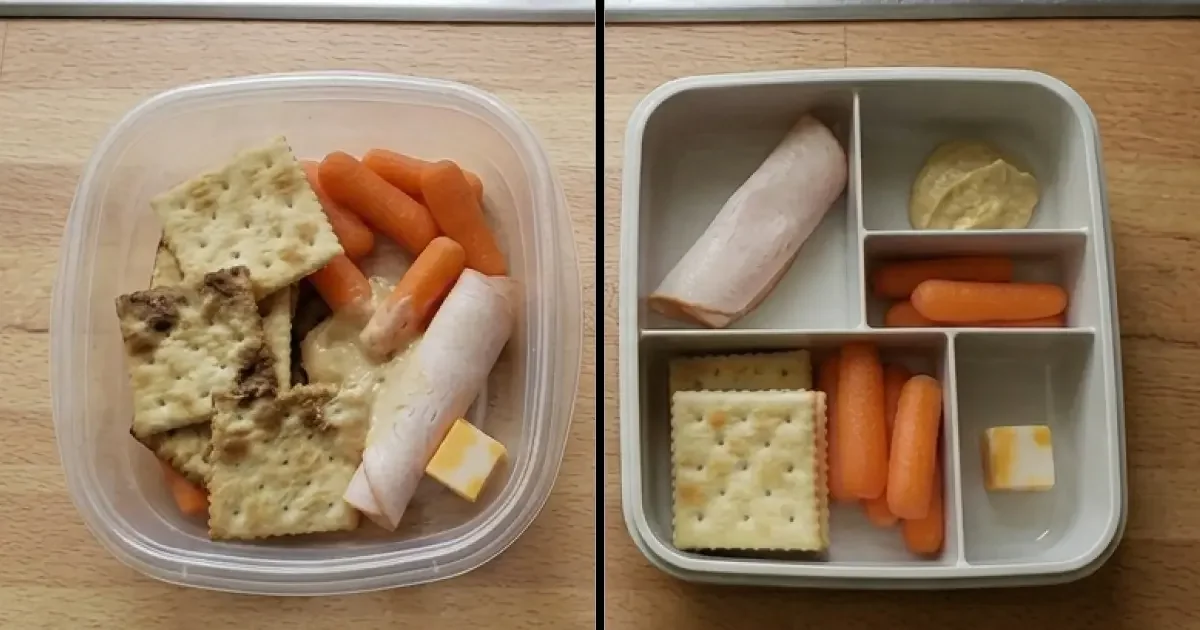
A bento box doesn't change the food. It changes how the child sees it. Each component in its own section, nothing touching — and for many picky eaters, that's the difference between "I'll eat this" and "I'm not even opening it."
What we got wrong
For three weeks we were convinced the problem was the turkey. Mia kept sending her sandwich back. We swapped the filling — same result. Turned out the problem was temperature: she wouldn't eat cold meat. The same sandwich in a thermos — gone completely.
Another one: we bought five new products in a month because we wanted to add variety. None of them worked. Not because they were bad products — because five new things at once is too much. One change every two weeks is a completely different result.
Three things that actually changed our approach
Hummus separate from crackers. Spread at 7am — by lunch it's mush. Same food in separate compartments — different result.
New things only on Wednesdays. Monday is the worst day for new food. Kids come back from the weekend adjusting to the school routine, they might have had a fight with a friend before lunch. In that state, even familiar food feels "off." When we made it a rule — new things only on Wednesday — the number of failed lunches dropped noticeably.
Less, not more variety. In our experience 2–3 components get eaten better than 5 different things. A smaller "plate" reduces the anxiety of choice.
What to do if your child only eats 5–10 foods
This is more common than it seems. And the first thing worth accepting: school is not the place to expand the list.
School lunch — safe foods only. If the list is short, pack only what they'll definitely eat. School isn't home: different space, different people around, less time, more distractions. A picky eater at school eats worse than at home even with their favorite foods.
Test new foods at home, in a familiar setting. Tuesday dinner is a much better moment for a first introduction than the school cafeteria on Friday. If they tried it at home and it was fine — then it can go in the lunch. Never the other way around.
Small wins count. Tried it and didn't spit it out — success. Ate half of something new — big success. Write it down. One family in our beta group noticed: when you start tracking small progress, the list slowly grows on its own — without pressure and without mealtime battles.
Don't compare to other kids. "But Lucas from class eats everything" — that's not an argument and it doesn't help. Every kid has their own timeline. The goal isn't 50 foods by the end of the year. The goal is for your kid to eat today.
More ideas that often work
Short — no long explanations. Tested in practice:
Mini pancakes (frozen, they'll eat them cold too), plain pasta with butter, cheese cubes, bagel bites, pretzel rods, mini muffins (plain, no filling), cucumber slices, sunflower seeds, apple slices with caramel dip in a separate container, mini rice cakes, corn on the cob (cooked, cold), pepperoni slices, plain tortilla chips, freeze-dried strawberries, plain popcorn.
None of these are guaranteed. But if your kid hasn't tried them yet — there's something here worth testing at home first.
Most picky eaters have a short "always" list and a longer "never" list. The goal isn't to shrink the "never" list fast — it's to know both lists well enough that you stop packing things that come back.
Frequently asked questions about school lunches for picky eaters
What should I put in a picky eater's school lunch?
Start with what they definitely eat at home. Never put something new in a school lunch — school isn't the place for first attempts. A solid starting point: PB&J or turkey + cheese, crackers, one familiar fruit, string cheese.
What do you pack for a cold school lunch for picky eaters?
A thermos opens up a lot of options — pasta, rice, nuggets all hold heat for 4 hours if you pre-warm the thermos first. Without a thermos: cold quesadilla, roll-ups, hummus + crackers packed separately. Anything that doesn't need reheating and won't get soggy.
My child comes home with a full lunchbox every day. What can I do?
First find out why — not enough time, trading with friends, or something happening at school. Then: reduce the number of components, keep only guaranteed foods, make everything finger food with nothing to open or cut. If it keeps happening — worth a conversation with their teacher.
How do I know what my child actually eats at school?
Ask every day what was left — not "how was your day." Write it down. After 2–3 weeks you'll see the pattern. Favory lets you scan and save these observations tied to specific products — so you're not starting from zero every time you're at the store.
How much food should I pack in a school lunch?
Less than you think. 2–3 small components get eaten better than 5 different things. If your child consistently sends food back — reduce the amount, don't add variety.