
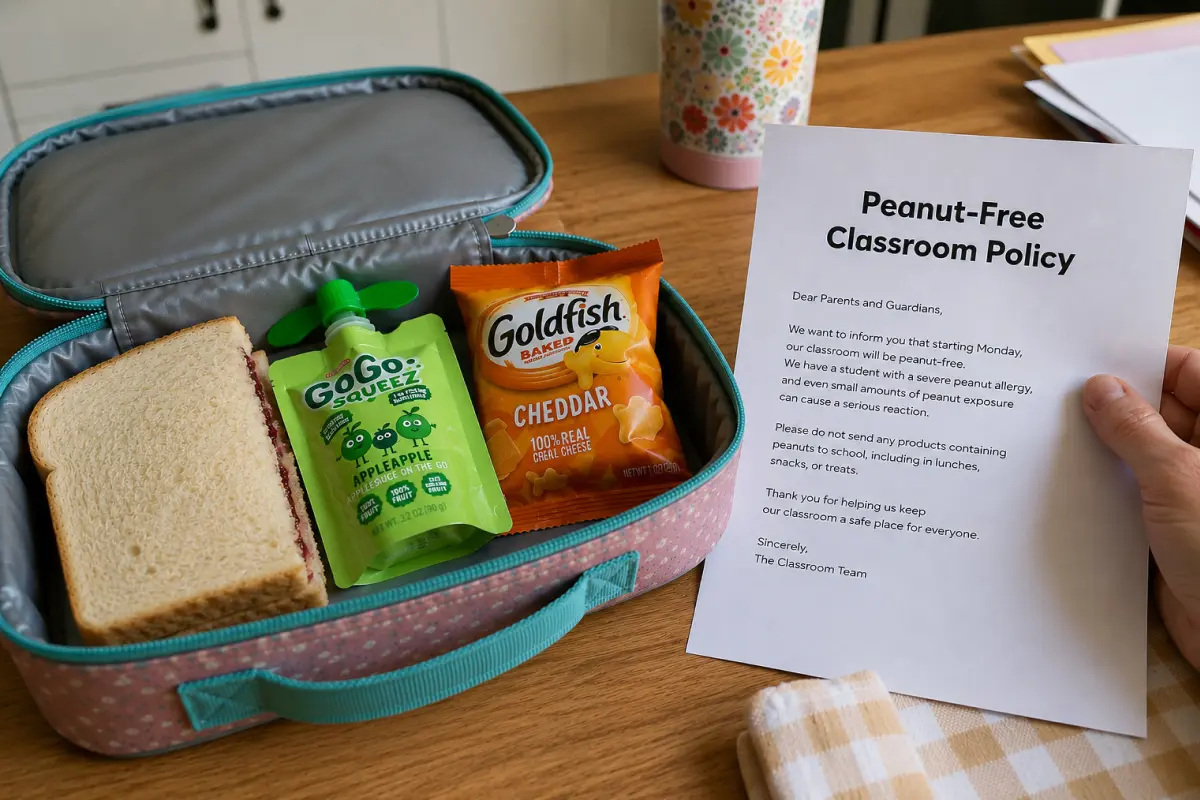
The note came home on a Thursday.
Starting Monday, our classroom would be peanut-free. One child in the class had a severe allergy, and the school needed everyone's cooperation.
I read it twice. Then I looked at the lunch I'd just packed for the next day: a PB&J, a GoGo Squeez, and Goldfish crackers. My daughter eats this exact lunch four days out of five. Has for two years.
I bought SunButter that weekend. Organic, the green lid. Made the sandwich the same way — same bread, same jelly, same ratio. She took one bite, put it down, and said: "this doesn't taste like peanut butter."
"Give it another bite," I said. "You'll get used to it."
She put the sandwich back in the container without saying anything else.
On Sunday we tried again. She asked: "can we have the old one?" I explained that we couldn't anymore. She didn't argue. She just took a smaller bite and set it down.
Monday the container came home almost full.
Tuesday too.
What actually worked for us — if you're just trying to pack Monday's lunch
- WowButter sandwich on white bread — not SunButter. WowButter is soy-based and much closer to the real taste.
- Original cheddar Goldfish — orange bag only. Not pretzel, not colors.
- String cheese — naturally peanut-free, no negotiation required.
- GoGo Squeez apple — apple flavor only. Not mixed berry, not strawberry.
Four things. It took us six weeks to get there.
The grocery store already solved the allergy problem.
My kid hadn't.
Every article I found gave the same advice: swap peanut butter for SunButter or almond butter, send fruit and cheese, try hummus with pretzels. Good advice for a kid who eats a reasonable range of things. My daughter had three safe foods. One of them had just been banned.
There are hundreds of peanut-free school lunch options for kids who eat everything. For a picky eater with three safe foods — that food list gets very short very fast. Peanut-free lunchbox options that this specific kid will actually eat during a short lunch break, without me there — that's a completely different list.
It took us a few more weeks to realize that.
The first week we thought the problem was SunButter.
We switched to WowButter — soy-based, closer to the real thing. She ate it. Not always, but she ate it. Some days the container came back with a half-eaten sandwich, some days with a whole one. We couldn't figure out the pattern.
The second week we realized it was the bread. WowButter on white — yes. WowButter on wheat — no. A difference invisible to me, obvious to her. I wrote a note and stuck it on the cabinet: white bread, WowButter, no crust.
Somewhere around then it finally clicked. The problem was never really about peanuts.
I was trying to hold dozens of small details in my head. Which Goldfish exactly. Which GoGo Squeez. Which bread. Which packaging. Every time I forgot one detail — the peanut-free school lunch came back untouched.
Reading other parents' stories around that time, I realized we weren't alone. One dad's son had tried WowButter a week earlier and filed it under never again. Dad didn't remember. Bought it again. Lunchbox came back again.
It's not pickiness. It's memory. Or rather — the absence of it at the moment it matters.
After the sixth week I realized I couldn't keep relying on my own memory for this kind of detail.
I started tracking differently. Not a list of peanut-free snacks — those are easy to find online. A list of what she actually ate at school versus what came back. What she asked for again the following week. What she refused once and never touched again.
It started as notes on my phone. Then a spreadsheet. Then I realized I couldn't be the only one with access to this information — when my partner goes shopping, or when a grandparent packs the lunchbox, they don't have what's in my head.
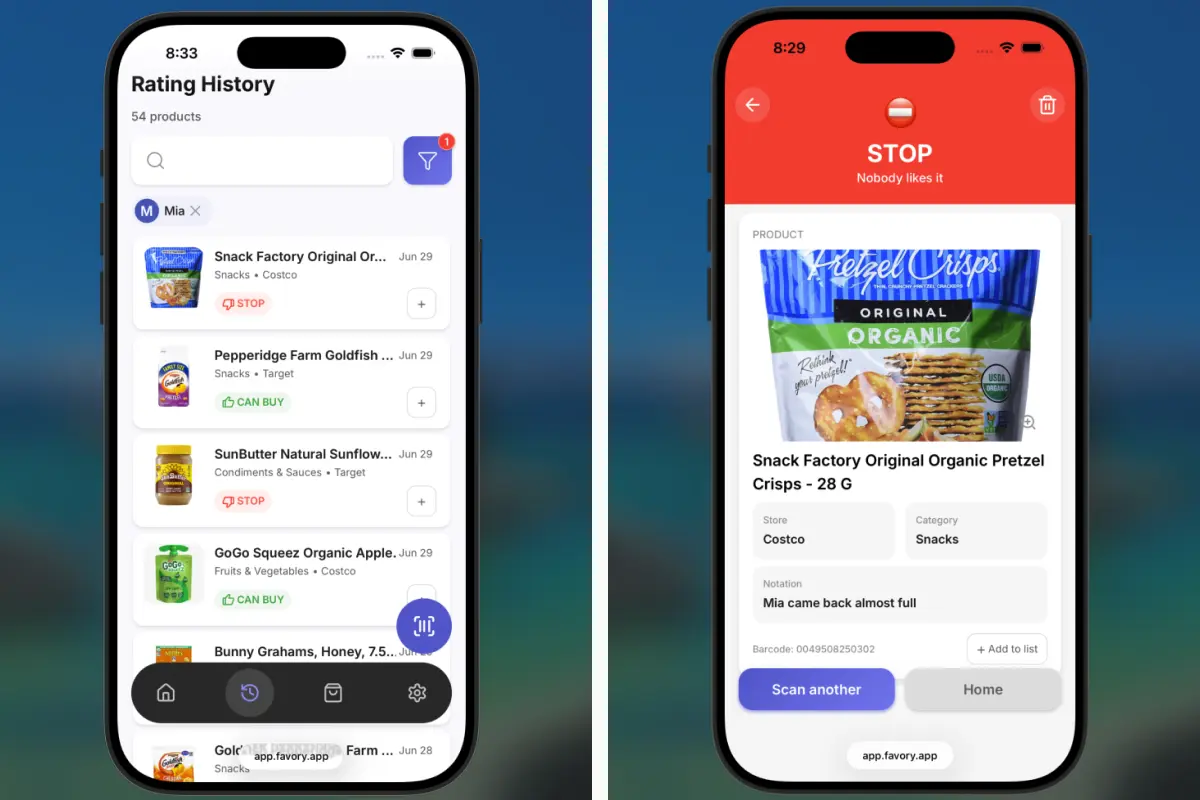
That little tracking system eventually turned into Favory. You scan a product in the store and see how each family member has rated it — STOP, CAN BUY, or MAYBE. WowButter on white bread — CAN BUY. SunButter — STOP. The blue Goldfish bag — STOP, came back twice. That information now exists outside my head. When someone else does the grocery run, they see the same list.
A few months later my daughter asked for "that sandwich."
Not the peanut butter one.
The WowButter one.
Not because it had become her favorite food. It had just stopped being "the weird substitute." It was just a sandwich now.
And in that moment I understood that the problem was never really about peanuts.
The problem was that I was trying to remember dozens of small details that determined what she'd actually eat. And every time I forgot one — she went to school hungry.
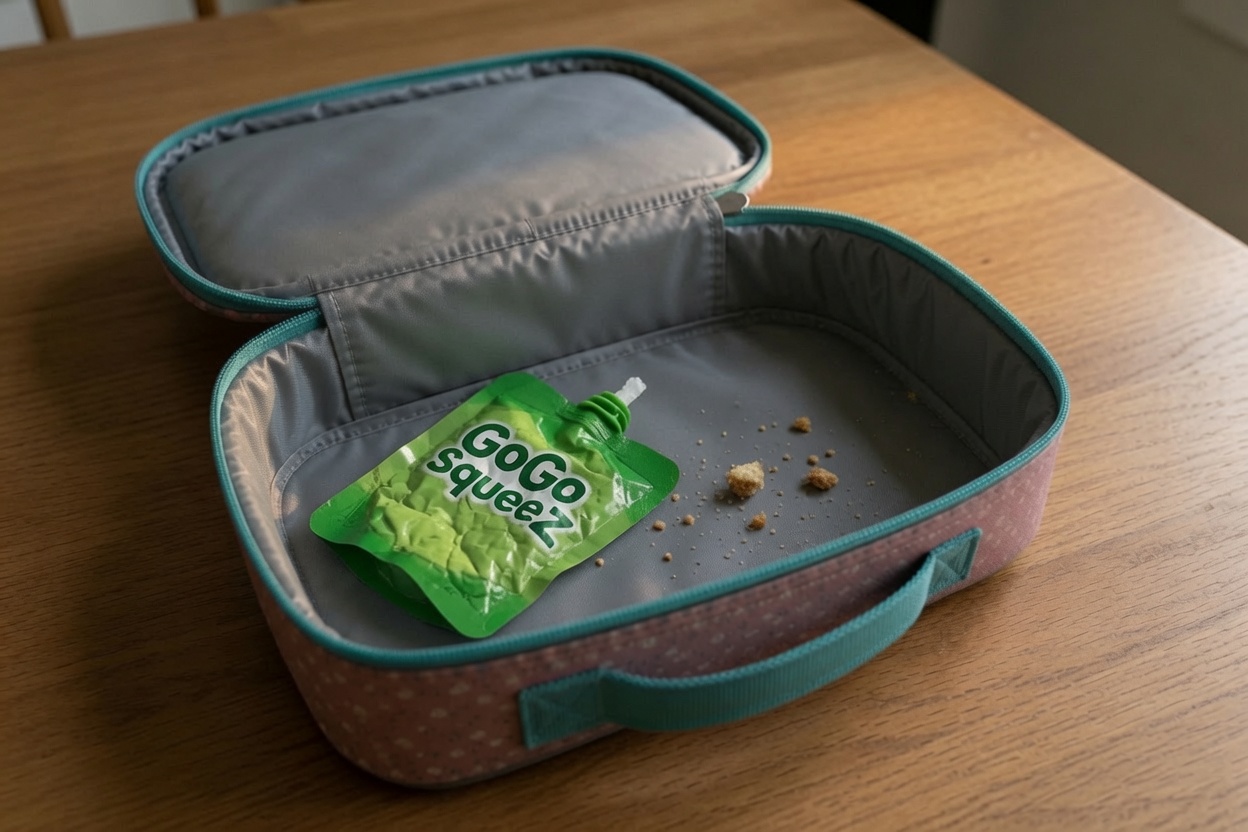
Now when the lunchbox comes home, it's usually empty.
That's a much better list to keep.