
Can you name 10 foods your child will eat this week? Can you pack tomorrow's lunch right now, without guessing? If you hesitated — keep reading.
The pediatrician looked at me and asked: "What does your child usually eat?"
I opened my mouth. And froze.
Not because my kid eats nothing. She eats. Something, definitely. I just couldn't say exactly what — not right then. Pasta? I think so. Yogurt? Which one? The blue one or the strawberry? Or had she stopped eating it a month ago and I'd just kept buying it out of habit?
The doctor waited. I said something vague about "mostly normal stuff" and felt like I couldn't explain my own child to someone who sees us twice a year.
I remembered that appointment for a long time.
Most picky eater tests ask the wrong question
Search "picky eater test" and you'll find dozens of versions. Most look roughly like this: 15 signs your child is a picky eater. Eats fewer than 20 foods — 3 points. Refuses new meals — 2 more points. Add it up and find out.
But these tests aren't measuring the right thing.
They compare your child to some imagined norm. To the neighbors' kids. To pediatric recommendations. To children online who seem to eat everything without a second thought.
Here's what's actually happening when a parent thinks "my child is picky":
The neighbor's kid eats 30 different foods. Mine eats 8. Something must be wrong.
But that's not a picky eater test. That's a comparison. And it almost never answers the question that actually matters on a Tuesday morning when you need to pack a lunch.
Why predictability matters more than variety
Three scenes.
The grocery store. You buy the yogurt that worked last month. It comes back untouched — one day, then two, then three. You're not sure whether she stopped liking it, got tired of it, or just had a bad week. So you buy it again the following week. It comes back again. You've now bought the same yogurt four times in a row and have no idea if your child still eats it.
The family dinner. Your aunt visited from out of town. Wanted to cook something for the kids. Asked what they eat. You started listing things — and realized the list was shorter than you thought. And that you weren't sure about half of what you named. Did they eat that now, or was it a year ago?
The pediatrician. Same scene as the beginning. Doctor asks. You freeze.
Your neighbor's child eats 30 foods. Yours eats 8. But you know those 8 by heart. You can pack a lunch without thinking. Buy groceries without doubt. Answer the pediatrician without freezing.
The real picky eater test isn't whether your child eats enough foods. It's whether you can predict what they'll eat tomorrow.
The picky eater test that measures predictability, not variety
Not a quiz. No scores. Five questions — and what you feel answering them will tell you more than any checklist online.
1. Can you name 10 foods your child will probably eat this week?
Most parents stop at 5 or 6. If you stopped — that's your real list.
2. Can you pack tomorrow's lunch right now — without guessing?
Not "I'll figure something out in the morning." Right now, confidently, without wondering "does she still eat this?"
3. If your partner went to the store without you — would they buy the right things?
Or would you need to send a list with explanations: "only that brand," "only if it's sliced," "only without the crust"?
4. Do you know which foods your child has eaten consistently in the last month — not last year, now?
Kids' tastes change. What they ate in September might not work in March. Are you tracking that?
5. If your pediatrician asked right now — would you answer immediately?
Or would you freeze, like I did?
There are no right answers. But if most of these made you pause — it doesn't mean your child is severely picky. It means you don't have a current picture. That's fixable.
The 2-week test that actually changed how we shop
We realized we couldn't answer simple questions about what our kids actually ate. Not because they ate badly — but because we weren't tracking it.
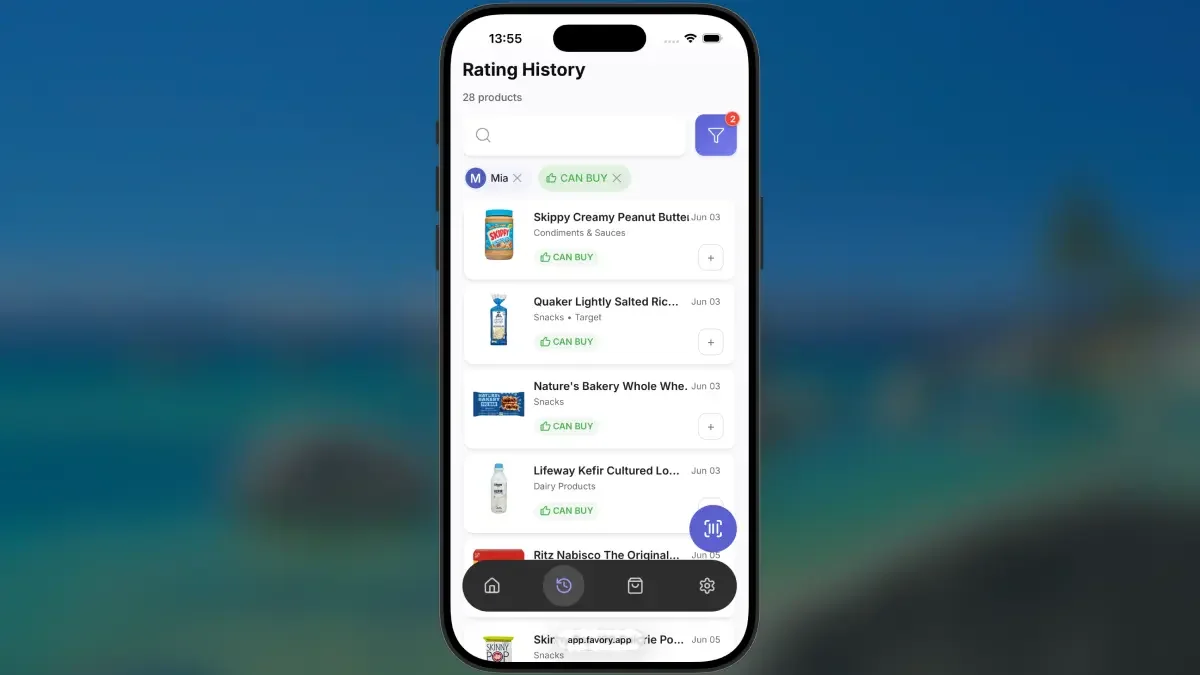
We started simply. After every meal, one question: what did they eat? We wrote it down. First in Notes, then switched to Favory where you can scan a product's barcode and save a rating for each child separately.
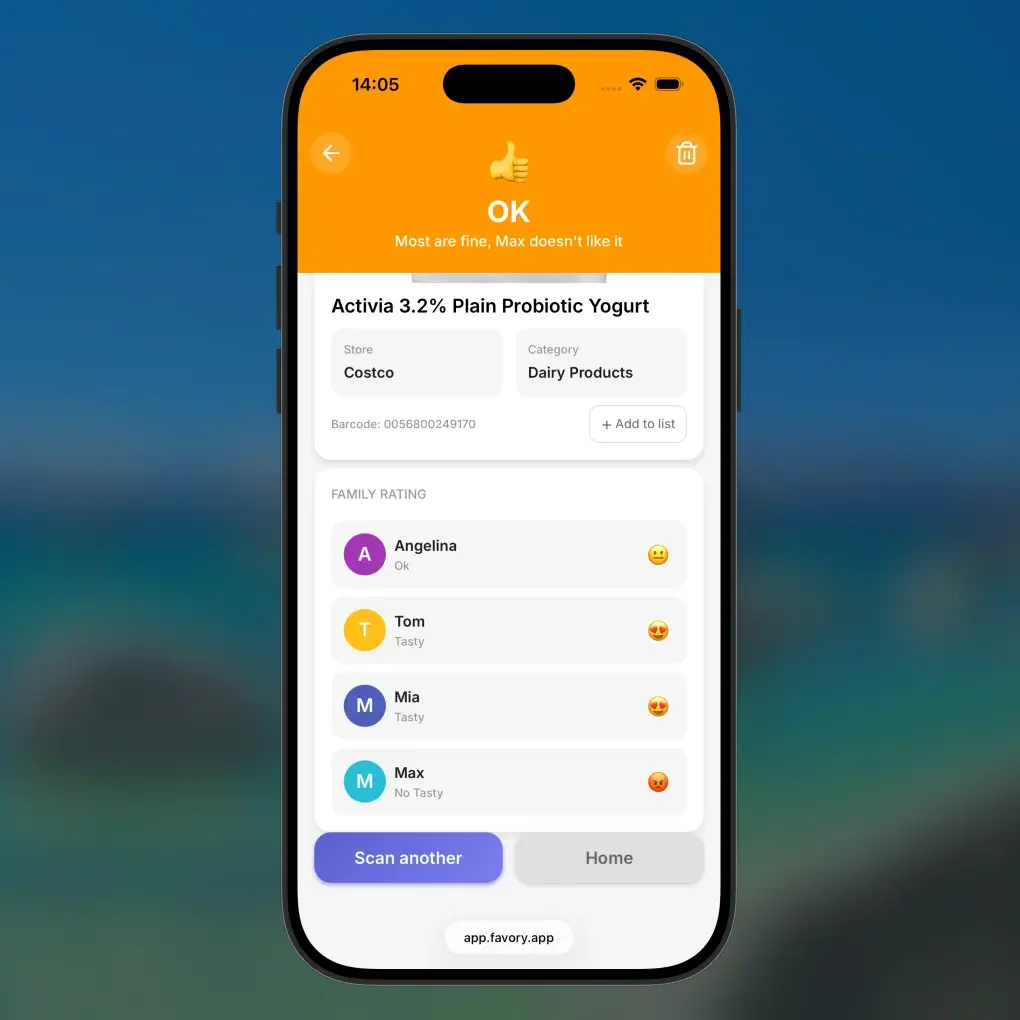
After two weeks, specific answers appeared.
Turned out one son has a stable list — 11 foods. Always the same, always eats them. My daughter has a wider list but with surprises: half of what I thought she ate, she'd stopped eating months ago. I was still buying those things out of memory.
One parent told us: "I thought the problem was my son. Turned out the problem was me — I just didn't know his actual list."
So is your child a picky eater?
Maybe. But that stopped being the useful question after we started actually tracking things.
That pediatric appointment ended fine. I said "mostly normal stuff" and the doctor moved on. But I walked out thinking about it the whole drive home — not because something was wrong with my kids, but because I realized I'd been asking the wrong question for years. Not "are they picky?" The question was: "do I actually know what they eat?"
Two weeks of writing it down gave me a better answer than any quiz ever did.
Frequently asked questions about picky eater tests
Is there a reliable picky eater test for toddlers?
Most online tests for toddlers focus on counting foods or comparing to developmental norms. A more useful approach: track what your toddler actually eats over 2 weeks, not what they've tried once. If you can name 8–10 foods they'll reliably eat, you have a working list — and that's what matters for daily feeding.
How do I know if my child is an extremely picky eater?
If your child is losing weight, refusing entire food categories, or showing genuine distress around meals — that's worth discussing with a pediatrician. Some children have sensory processing differences that go beyond typical pickiness. But if they eat a small number of foods consistently, the question isn't "how picky are they" — it's "do I know what that list is?"
How to test if a child is a picky eater at home?
Ask yourself five questions: Can you name 10 foods they'll eat this week? Can you pack tomorrow's lunch without guessing? Can your partner shop without a detailed note from you? Do you know what they've eaten in the last month — not last year? Could you answer a pediatrician's question right now? Your answers reveal more than any scoring system.
At what age does picky eating peak?
According to most pediatric observations, picky eating tends to be most pronounced between ages 2 and 6. But "normal for the age" doesn't mean "not worth tracking." Even a short list — if you know it reliably — is a better starting point than a long list you're guessing at.
How can I track what my picky eater actually eats?
Ask after every meal and write it down. After 2 weeks you'll see a pattern — what disappears consistently, what comes back untouched, what varies by day. Favory lets you scan barcodes and save ratings tied to specific products, so you're not starting from memory every time you shop.