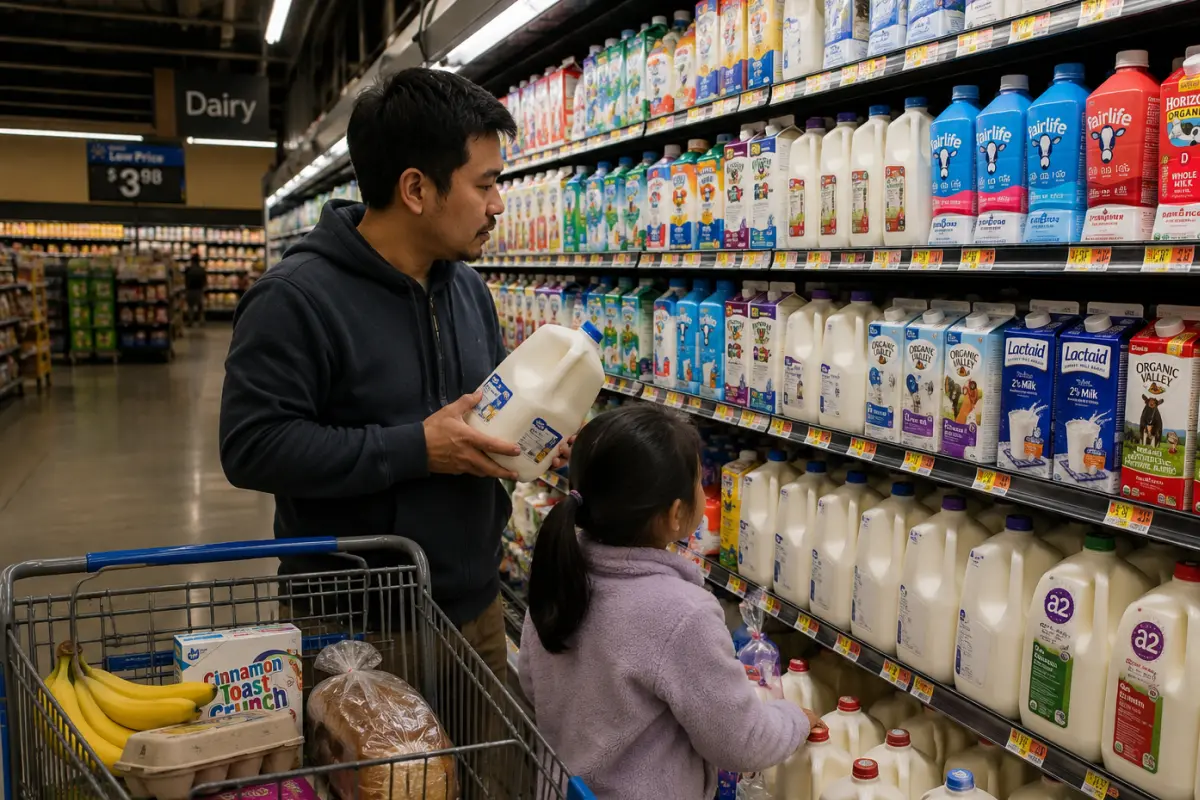
OurGroceries does one thing better than most apps: the list is always synchronized and always there.
We used it for two years. Not once did it lag, lose data, or show outdated information. When my wife added something on her way home, I saw it instantly at the store. That part genuinely works.
But one evening I opened the fridge and realized I'd bought the wrong cheese for the third time.
Not because I forgot to put cheese on the list. It was there. But "cheese" on a list and "Tillamook yellow block, small size, because our daughter won't eat sliced cheese or any other brand" are two different things.
That was the moment I realized we didn't have a shopping list problem. We had a family memory problem.
That's when we started keeping a second list in Google Keep.
- Our daughter only eats Tillamook block cheddar.
- Don't buy dinosaur nuggets again.
- Dad prefers 2% milk.
- GoGo Squeez apple only.
Many parents end up with some version of this list. Almost none of them have it in their grocery app. We wrote about this pattern in more detail here: The grocery app that actually remembers what your family likes.
This isn't about picky eating
When a child moves to a new country and refuses food, it's not about being picky. It's physiology.
American bread is sweeter and softer than most Filipino, European, or Latin American bread. Milk is pasteurized differently — different aftertaste. Chicken smells different because of different farming standards. Rice is different. Even the water is different — and that affects the taste of everything made with it.
A child who ate a certain product for three years doesn't just "not want it" — she literally doesn't recognize the taste. It's a new product to her, even if the label says the same thing and shows the same logo.
We thought it would be easier for us than for others. We speak English. We watched American shows. We knew what Walmart was.
But food is a different language. And nobody teaches you that one.
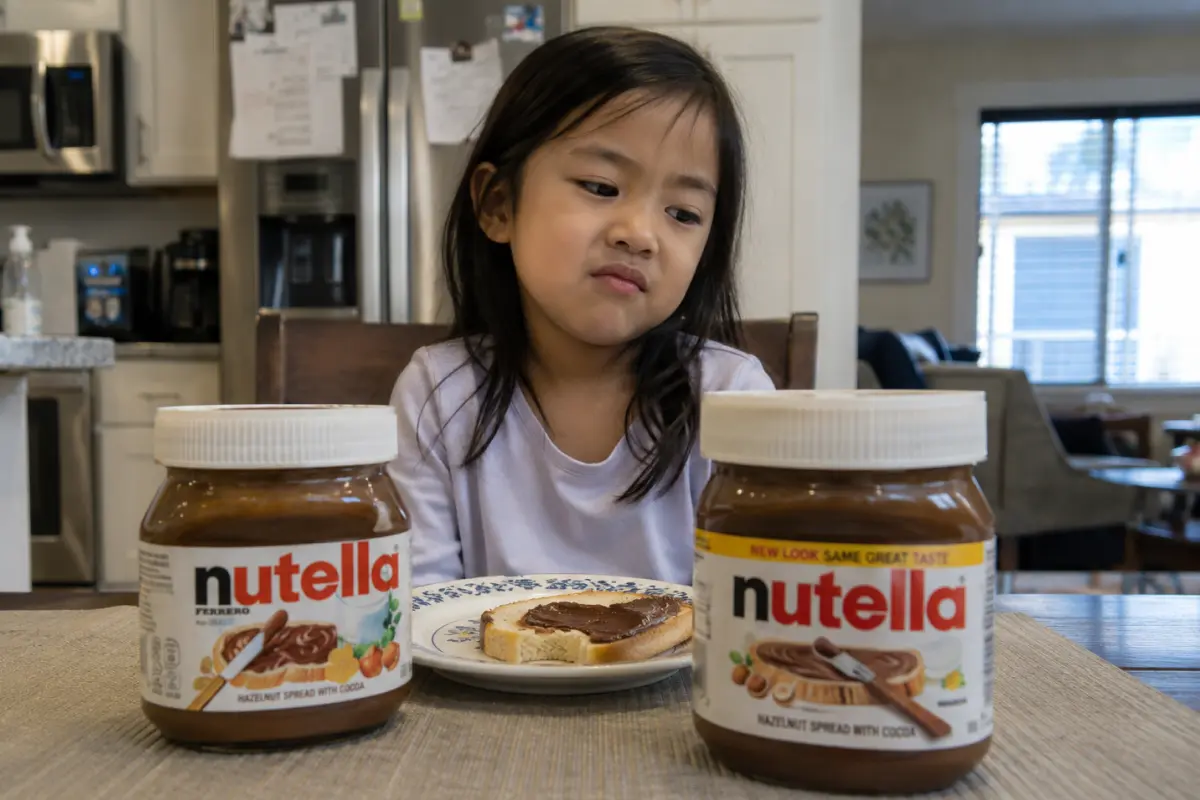
The milk aisle
My friend Bjorn moved from Norway a year before us. He told me: "We stood in front of the milk shelf for thirty minutes and didn't know which one to pick." I recognized that situation before it even happened to me.
In an American grocery store, one product can have forty versions. Whole, 2%, 1%, skim, oat, almond, soy — and each one in five different brands. If you've never lived in this system, you don't know what criteria to use. And when you choose — you don't know if your child will drink it.
In the first weeks we did what everyone does: asked in Filipino community groups on Facebook, watched YouTube videos, took photos of shelves. The first trip was survival. The second was a little easier. The third started to feel like normal shopping.
But the knowledge you accumulate — what worked, what came back untouched, what your child asked for again — goes nowhere. It stays in your head.
"Wrong one" — the classic
A month after we moved, my wife asked me to stop by and pick up milk. I did.
"Wrong one," she said.
Whole instead of 2%. Right shelf, right section — but the wrong option out of eight possible ones. She already knew which one we buy. I didn't yet.
It wasn't her fault or mine. We just hadn't synced our knowledge yet. Until she sent me the exact name with a photo, I was guessing.
The same thing happened when Lola arrived from the Philippines. She didn't know what our daughter ate now. She brought recipes, she brought spices — but she didn't know that in two months our daughter had fallen in love with Goldfish crackers and mac and cheese and no longer wanted heavy soup for lunch. Conflicts at the table — not from bad intentions, but from an information gap.
I showed Lola the list on my phone. She looked at it and said: "Why didn't you do this sooner?"
What hybrid actually looks like
Families from different countries describe the same experience: two to four months in, you find a balance. Not "became American" and not "only eat food from home." A hybrid — traditional adobo and sinangag plus American staples that passed the test.
Three months in, maybe 60% of what we buy is things we never heard of before we moved. The other 40% we shipped, found at a Filipino store, or learned to make ourselves.
But here's something nobody warned us about: it doesn't always go one direction. Some products we expected to hate turned out better than back home. American peanut butter — creamier, smoother than what we had. Certain cereals our daughter had never tried became instant favorites. Even some cheeses we initially dismissed ended up staying on the list permanently.
You can't predict which way it goes. The only way to find out is to try everything — and remember what happened.
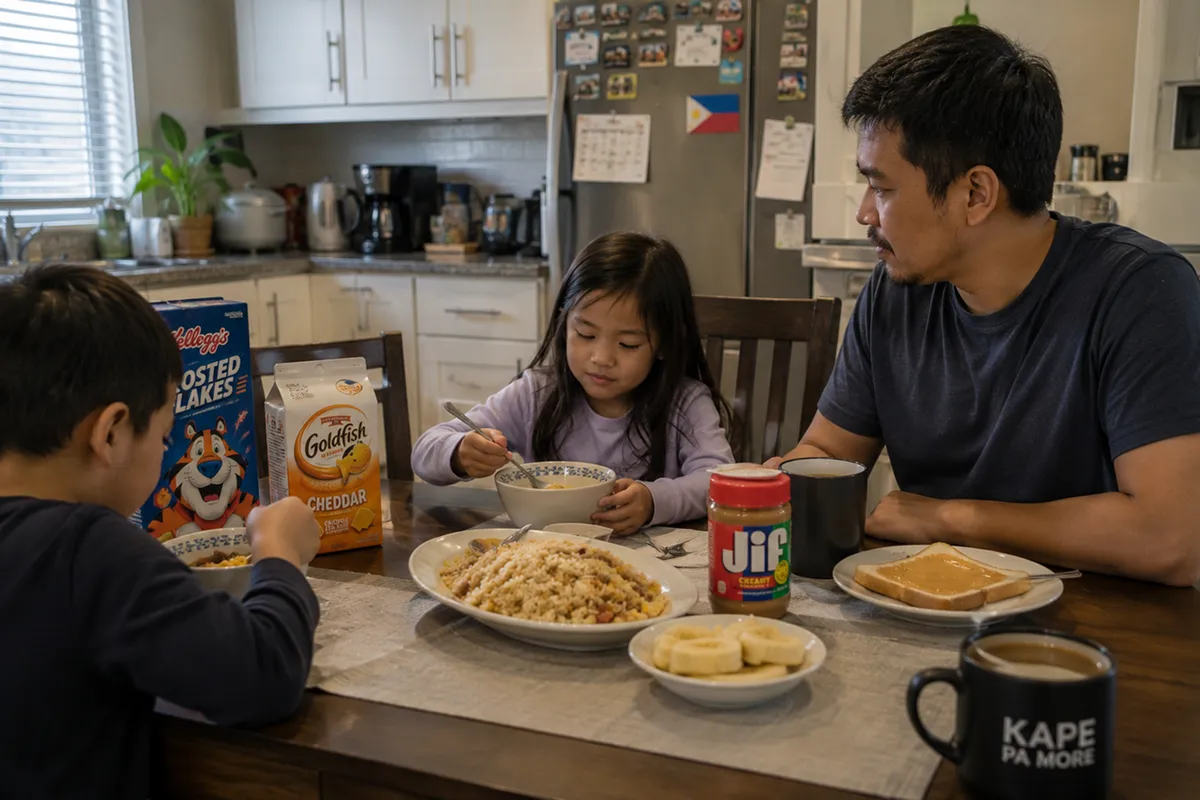
Parents describe it as ongoing detective work: what was fine yesterday isn't today. What she refused, she suddenly wants.
Memory is a bad tool for this kind of work.
How we figured it out in two to three months
We found Favory through a Filipino parents group on Reddit. Someone wrote: "This app saved my grocery trips."
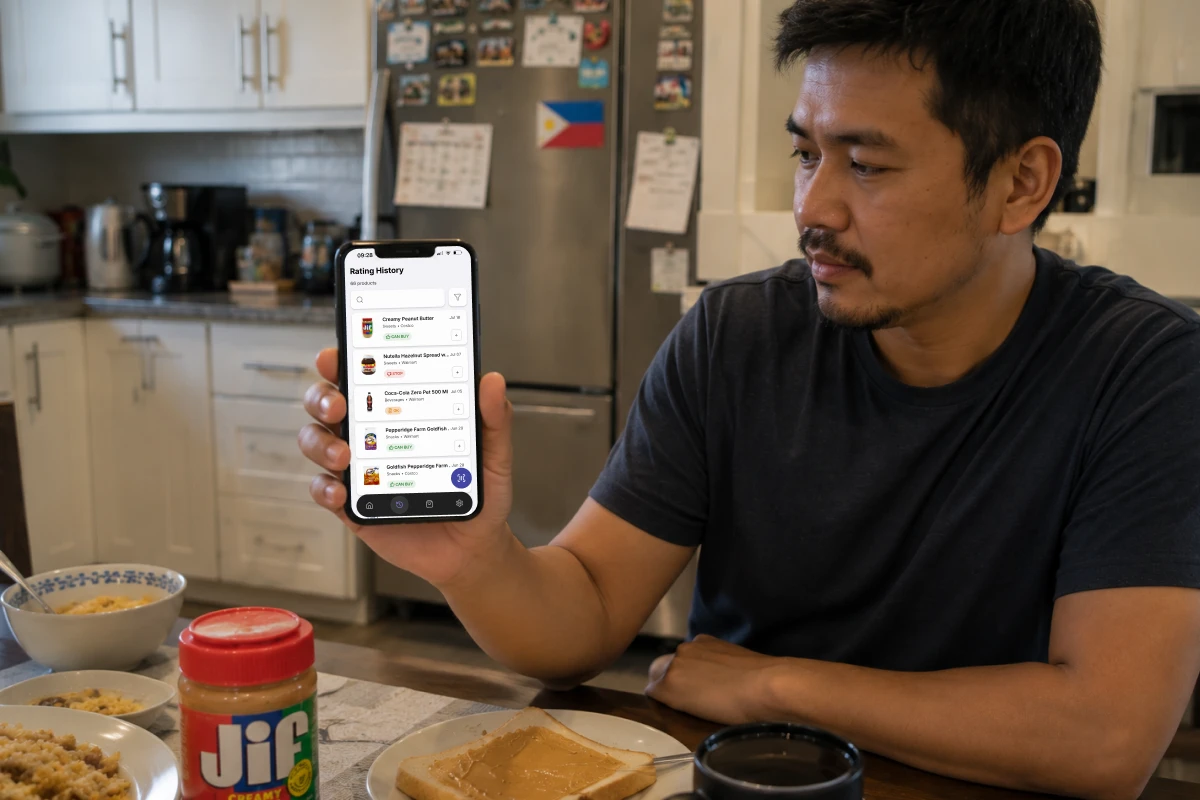
The idea is simple. You scan a product at the store and see whether your family has already tried it and how they rated it. CAN BUY means tested and they'll eat it. STOP means don't spend the money again. Each family member has their own profile.
We started scanning everything we bought. Child ate it — CAN BUY. Came back untouched — STOP. Asked for it again — stays on the list.
Within two to three months we had a base. Not large — maybe forty or fifty products. But these were products we knew would get eaten. When my wife goes to the store, she opens the list. When Lola arrived, I showed her the list instead of trying to explain in words.
We started from zero. But every new purchase built something — instead of disappearing into someone's head.
Questions parents ask