
Two years ago, my wife ended up in the hospital. We had two kids at the time.
She was there for five days. I was home alone with the kids.
First morning — I opened the fridge and froze. I didn't know what to make for breakfast. Not in the "what do they generally like" sense — I mean what they would actually eat that morning, without a meltdown, without a plate being pushed away.
I made scrambled eggs. My older one doesn't eat scrambled eggs — I forgot. He ate crackers.
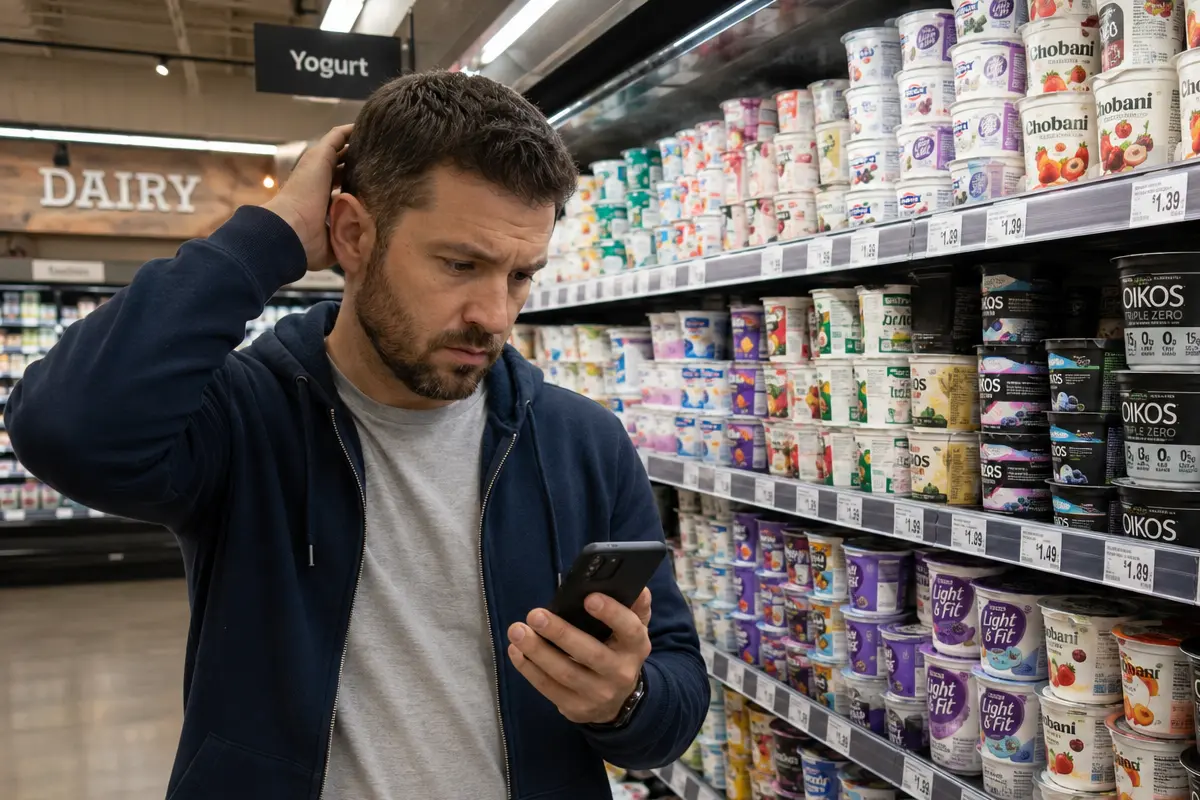
I went to the grocery store. Grabbed a yogurt — exactly as I'd seen in the fridge. Came home. My daughter pushed it aside. "That's not my yogurt." Turns out my wife bought different brands for each of them.
That evening I called my wife at the hospital and asked what to buy tomorrow. She was on an IV drip, dictating a grocery list to me. Which yogurt. Which bread. Which crackers — Goldfish only, not Ritz. I wrote it all down, thinking: why didn't I know any of this?
Over five days I spent more on food than we usually do in two weeks. Half of it came back untouched. I called her three more times — embarrassed each time to be bothering someone in the hospital over yogurt.
When she came home, we didn't change anything. We just got through it and moved on.
The same thing happened again a few weeks ago
A few weeks ago, my wife was in the hospital again.
Three kids now.
I knew what was coming — I'd been through it before. But something was different this time.
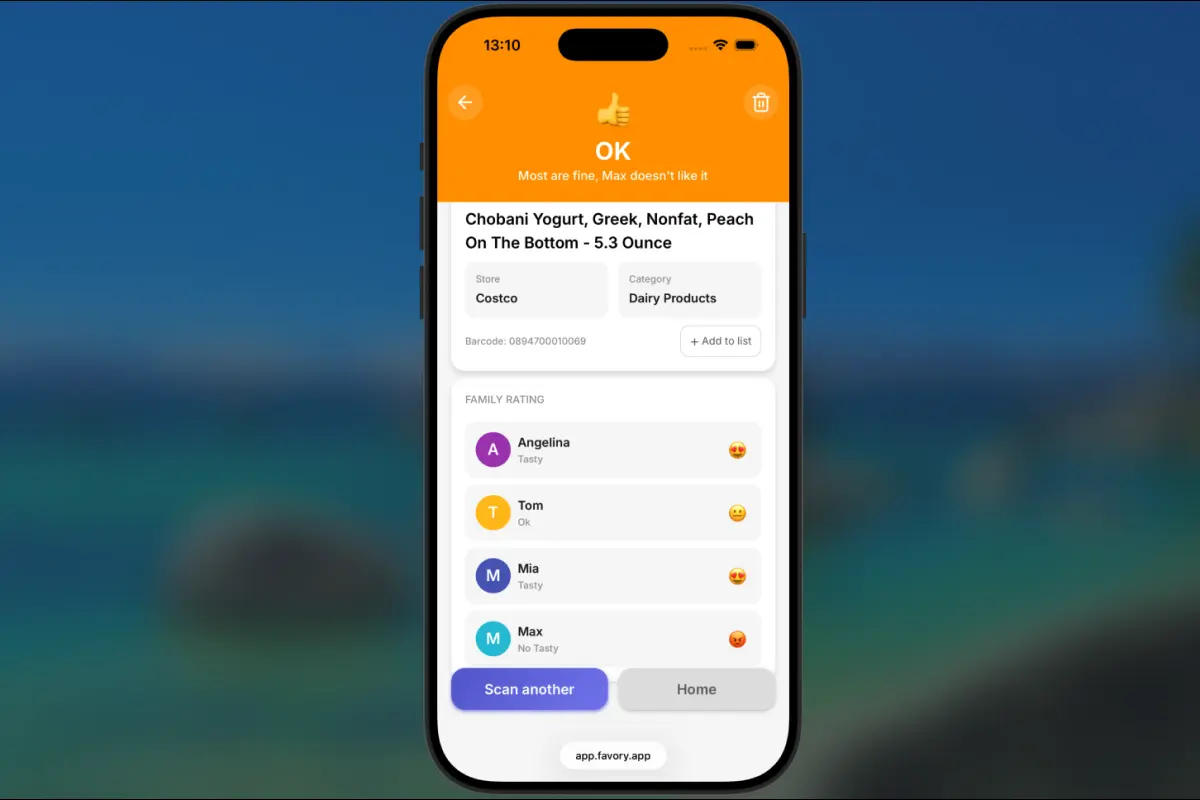
Over the past two years I'd built Favory, and we'd been using it as a family. We scan products after shopping and rate them for each kid. Mia — what she eats, what she doesn't. Max — his own profile. Anya — hers.
The next morning I opened my phone instead of the fridge. Favory, Mia's profile — what she eats for breakfast. Max's profile. Anya's. Everything there. With dates, brands, ratings.
I went to the store without a single phone call. Bought the right things. All three kids ate.
Five days. Not one call to my wife about food. Not one product returned.
What I understood standing in the grocery aisle
Right there — between the yogurt shelves — I understood two things.
First, as a dad: two years ago I didn't fail because I'm a bad father. I failed because the knowledge of what our kids eat lived only in my wife's head. When she ended up in the hospital, that knowledge became inaccessible.
Second, as a founder: I'm building the right thing. Not because someone told me the idea was good. But because I stood in a grocery store and felt the difference between guessing and knowing. Twice. In the hardest possible moment.
Why food knowledge can't live in one person's head
Most families end up this way — one parent becomes the "food person." They know what each kid eats, which brand, what never to buy. The other parent follows their lead.
That works fine when everyone's home. But the moment that parent gets sick, travels for work, or is just unavailable — the knowledge disappears. What's left is phone calls. Or mistakes.
One parent told us: "My wife was away for a week visiting her mom. I thought I'd manage. First day I realized I didn't even know which juice to buy."
A list on the fridge is a step forward. But it goes stale in a month because kids' tastes change. And it won't be with you when you're standing in the store.
What's worth doing before something like this happens
Ask yourself this: if your partner couldn't go to the store tomorrow — could you buy the right things for each kid without calling them? If you're not sure, the knowledge hasn't been transferred yet.
Write down who eats what, right now. Not a year ago — now. One child at a time. With specific brands. With a "never buy" list. It takes 20 minutes.
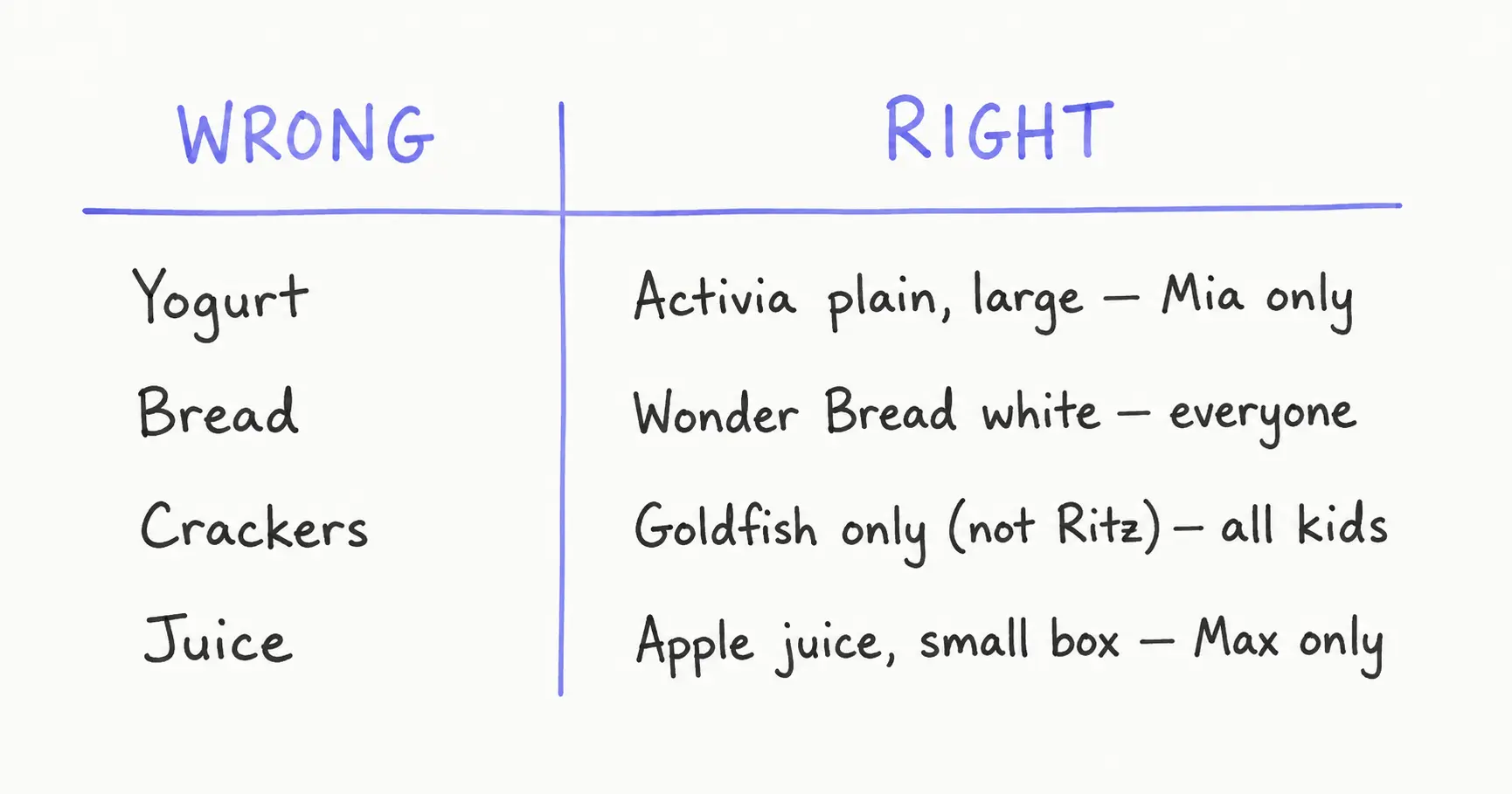
Make it accessible to both of you. Not in notes on your own phone — somewhere your partner can also see and update.
Update it regularly. A list that hasn't been touched in six months can be worse than nothing. Kids' tastes shift. What worked in September might not work in February.
It's not "does my partner know what to buy?" It's "does that knowledge exist somewhere outside my head?" If the answer is no — one unexpected week can mean a lot of wrong groceries and uneaten food.