
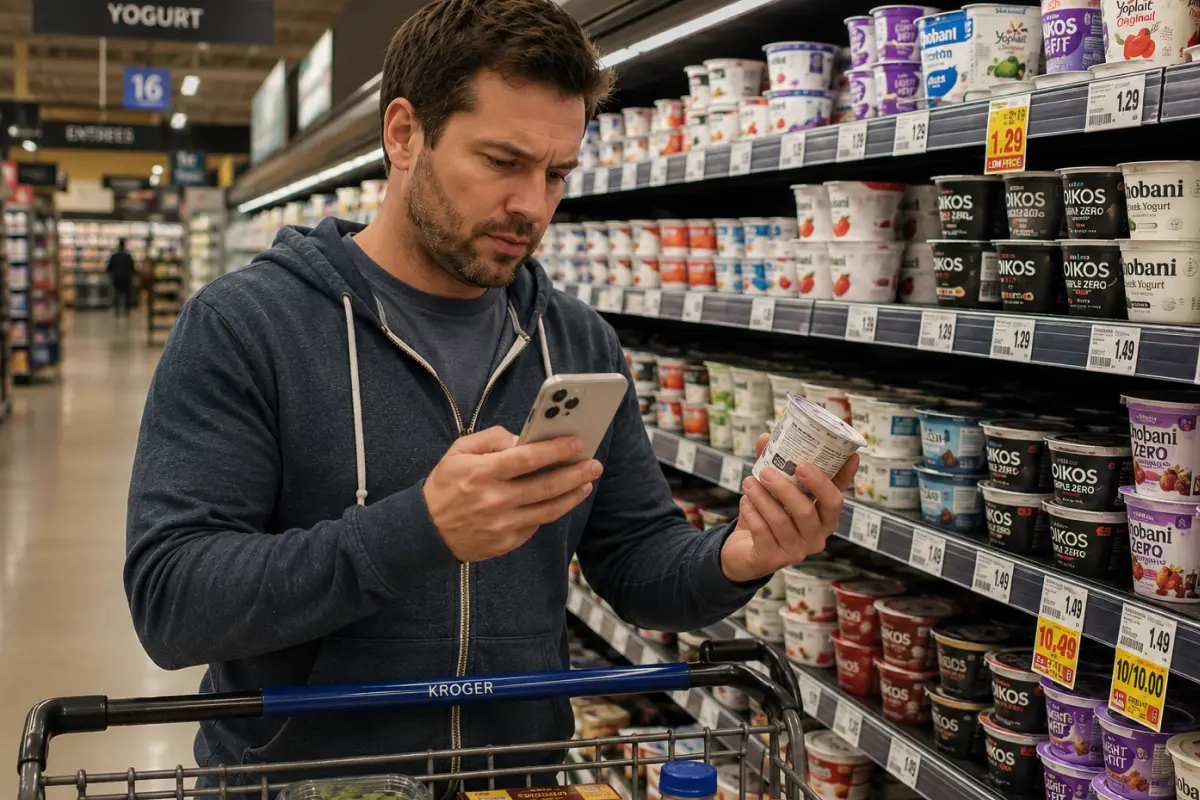
Last year I did what most parents do — read the reviews, downloaded a few apps, picked AnyList. Clean interface. Real-time sync. My wife sees my list the moment I update it.
I still came home with the wrong yogurt.
The list wasn't wrong. It said "yogurt."
The problem was that "yogurt" and "Activia strawberry, small container, not the large one" aren't the same thing. We'd tried both. We knew the difference. We ate the wrong one anyway. Nobody complained. But we'd already learned we liked the other one better, and somehow we were paying to learn the same lesson twice.
After that I started asking other parents how they handled it. Almost everyone described the same setup: one app for the actual list, and a separate system — sticky notes, a Google doc, a mental file — for the real rules of their household shopping. Which brand is worth the price. What to grab only when it's on sale. What they tried once and never again.
Families already have hundreds of these decisions. They just don't have one place where those decisions live.
One practical test
Ask yourself: if your partner went to the store right now with no instructions — how many items would they get wrong? Not forget to buy. Buy, but not the right version.
If the answer is zero or one — a basic shared list app is probably enough for you.
If the answer is several — your problem isn't the list. It's the memory of decisions that comes before the list.
What the best grocery apps for families actually get right
All the popular apps solve one problem well: don't forget what to buy, and don't buy it twice. AnyList, OurGroceries, Cozi, Bring! — they're all excellent at this. Shared list, synced across devices, nothing falls through the cracks.
But there's a second problem none of them solve: what's actually worth buying.
Every family is constantly evaluating products — by taste, price, and how they compare to what they've bought before. Expensive doesn't mean better. A store-brand ranch dressing from Kroger scored higher than Hidden Valley in Consumer Reports blind taste tests, at half the price. On the other hand, Kraft Mac & Cheese is one of those products where the store brand just doesn't land the same way — and if that's what your family eats, experimenting is a waste of money.
The point isn't that one brand beats another. The point is that your family already knows which one they prefer. The problem is that knowledge lives in someone's head, not somewhere both of you can access it the next time you're standing in front of the shelf.
One dad described his system: grocery app for the list, separate Google doc for "what we buy, what we don't, and why." A mom on a parenting forum uses AnyList for the list and a paper note on the fridge for "brand rules." The technology solved one problem and left the other one solved manually.
What actually sets a good family grocery app apart
A standard shopping app solves the memory problem at the product level. Milk. Bread. Apples. Useful.
A family app — with different preferences, years of accumulated shopping experience, a partner who goes to the store instead of you — needs to solve the memory problem at the decision level. Not just "buy yogurt" but "this yogurt yes, that one no, here's why."
That difference feels small when you're doing all the shopping yourself and keeping it in your head. It becomes critical when your partner goes to the store, when a grandparent is watching the kids and needs to know what to buy, or when you're standing in front of a shelf with two almost-identical products and can't remember which one you tried and what you thought.
What I actually tested
I spent a few weeks with the apps people recommend most. Here's what I found.
AnyList — the best shared list app if you need a list. Instant sync, clean interface, you can add notes and photos to individual items. But the notes are manual every time, there's no structured memory of past decisions, no profiles per family member. Excellent at what it does. It just doesn't do the second thing.
OurGroceries — simple and reliable, works well across iOS and Android. Same limitation: great list, no decision memory.
Cozi — more than a grocery app; it's a full family organizer with a calendar, to-do lists, and meal planning. If you want one app for everything, Cozi is a solid pick. For grocery shopping specifically it stays basic.
Bring! — nice interface, visual product categories, comfortable to use at the store. Also no decision memory.
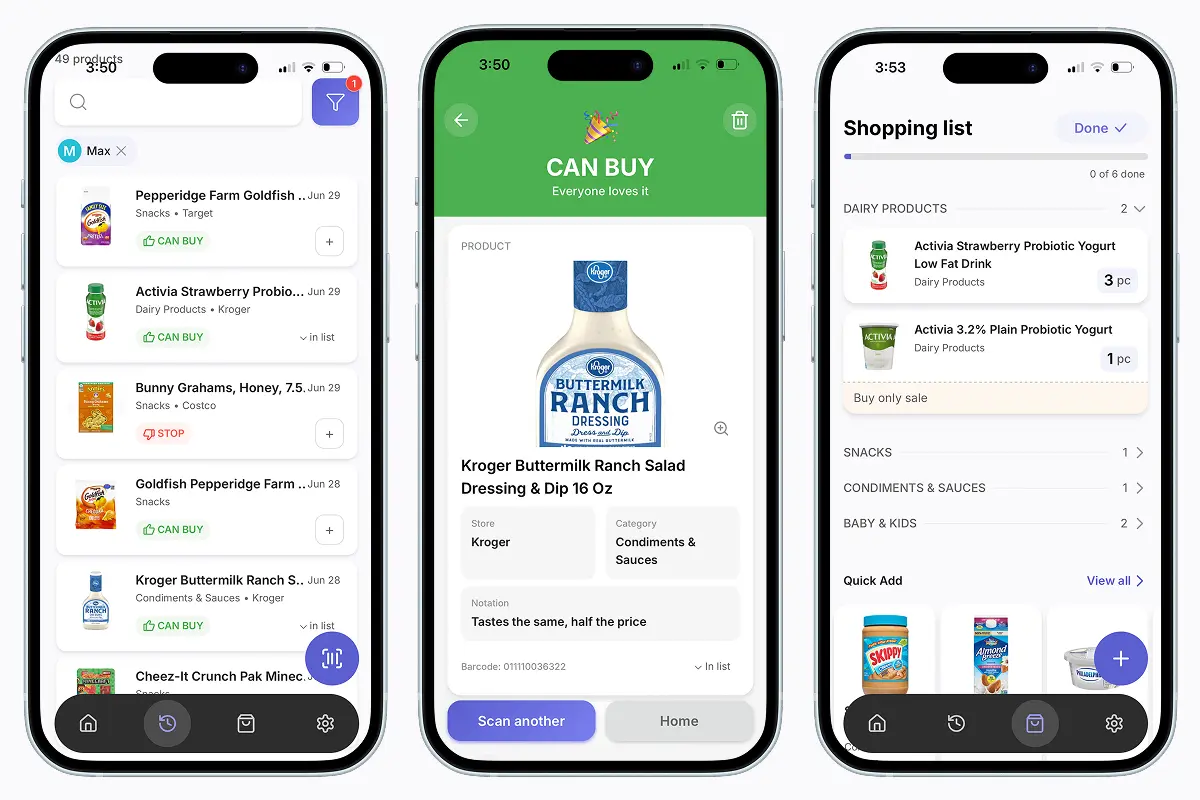
Favory — approaches the problem differently. Instead of remembering what to buy, it remembers what your family already learned.
Instead of adding a generic "crackers" to your list, you scan the barcode and save the exact brand and flavor your family has already tried and rated. Over time, your shopping list becomes a shortcut to hundreds of decisions you've already made. Building your weekly list takes a few taps — only products your family actually wants. No explaining to your partner. No guessing.
And if you're standing in front of the shelf looking at a new brand?
You scan the barcode. In two seconds, Favory tells you if anyone in the house has already tried it, rated it, or banned it from the kitchen.
No phone call home.
How to pick the right app for your family
If the main problem is buying the same thing twice or forgetting what you need: AnyList or OurGroceries. They solve this well.
If you want to plan weekly meals and generate a shopping list from recipes: Cozi or AnyList with meal planning. The list will be built from abstract ingredients — "chicken," "yogurt" — with no connection to the specific brands and products your family actually buys.
If the main problem is buying the wrong thing — wrong brand, wrong size, or a more expensive product that turned out worse than the cheaper one you tried six months ago and can't quite remember: you need a system that stores decisions, not just a list. That's what Favory is for.