

OurGroceries does one thing better than most apps: the list is always synchronized and always there.
We used it for two years. Not once did it lag, lose data, or show outdated information. When my wife added something on her way home, I saw it instantly at the store. That part genuinely works.
But one evening I opened the fridge and realized I'd bought the wrong cheese for the third time.
Not because I forgot to put cheese on the list. It was there. But "cheese" on a list and "Tillamook yellow block, small size, because our daughter won't eat sliced cheese or any other brand" are two different things.
That was the moment I realized we didn't have a shopping list problem. We had a family memory problem.
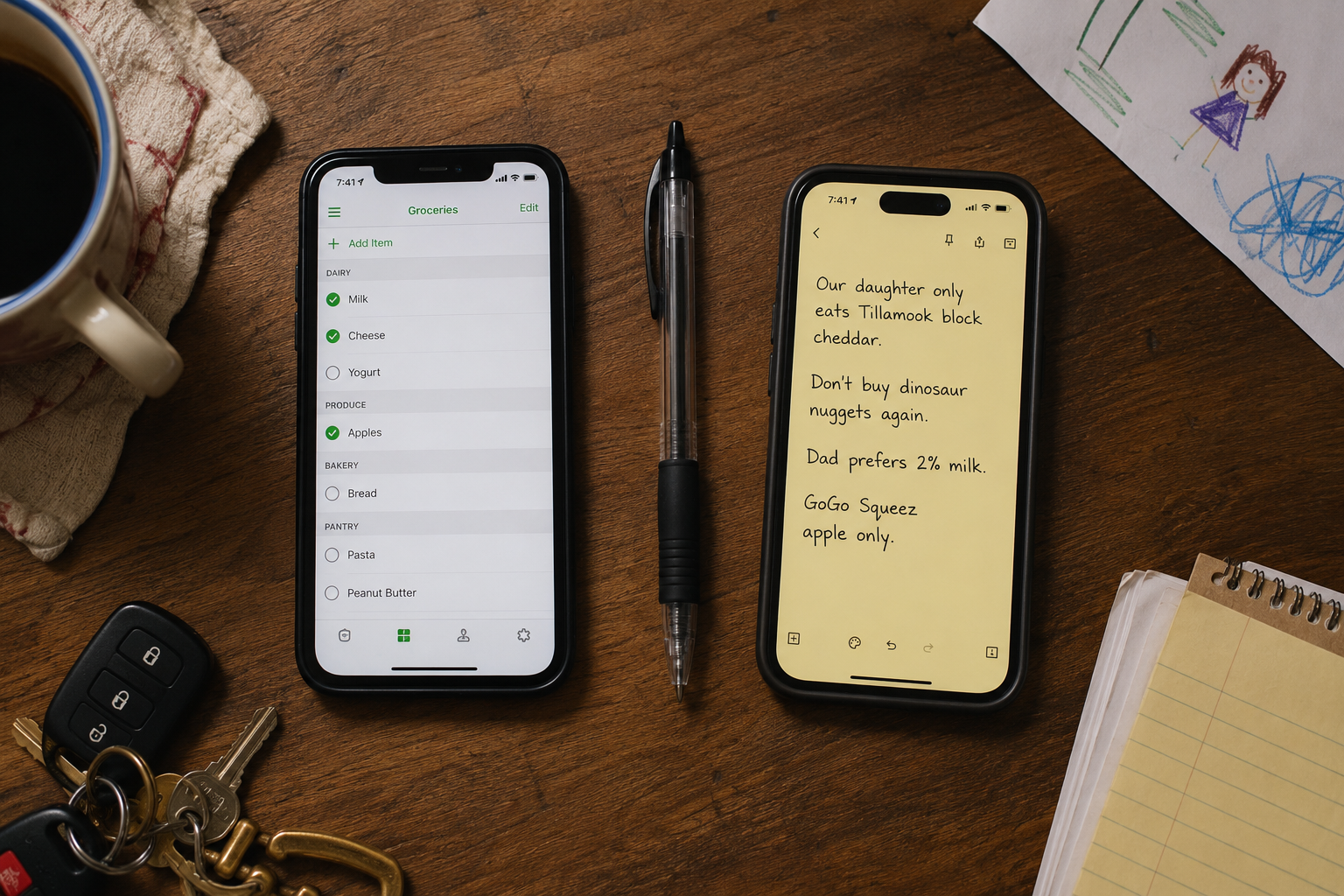
That's when we started keeping a second list in Google Keep.
- Our daughter only eats Tillamook block cheddar.
- Don't buy dinosaur nuggets again.
- Dad prefers 2% milk.
- GoGo Squeez apple only.
Many parents end up with some version of this list. Almost none of them have it in their grocery app. We wrote about this pattern in more detail here: The grocery app that actually remembers what your family likes.
What OurGroceries does well
Before talking about alternatives — honestly about what works.
OurGroceries has been around since 2009 and remains one of the most reliable shared grocery list apps available. Sync is instant and stable across iOS, Android, Apple Watch, web browser, and Alexa. The free tier covers most needs. The interface is intentionally simple, which is one of the reasons the app has remained popular for so long.
For families where the main problem is buying the same thing twice or forgetting that you need milk — OurGroceries solves this as well as anything.
OurGroceries solves coordination.
It doesn't solve decision-making.
The frustration starts when a family becomes more complex — different tastes, kids with specific preferences, a partner who goes to the store but doesn't know the details.
Across Reddit threads and app store reviews, the same complaints appear repeatedly:
- The app remembers purchase history, but not what anyone actually liked. Bought a new cheese brand, the kid ate everything — but next week the list just says "cheese" and you're guessing again.
- A partner sees "milk" but doesn't know — 2% or whole, which brand, large or small. Buys the wrong one. Adding notes every time is inconvenient.
- With two picky eaters, the app doesn't help remember that one child only eats a specific pasta shape. For a deeper look at tracking what picky eaters actually eat, see Picky Eater Food List: What My Kids Actually Eat.
- There's no simple way to mark "don't buy again" for the whole family. It ends up on the list next week anyway.
- Some families keep a separate Excel sheet with product ratings — what the kids like and don't like. The app doesn't support family preferences at all.
This isn't a criticism of OurGroceries. It's a description of its boundary.
Shopping lists remember what to buy.
Families need something that remembers what not to buy.
Most families end up piecing together a system: a shared grocery list app for what to buy today, plus notes, a spreadsheet, or WhatsApp for the real household rules — which brand, who eats what, what came back untouched, what to never buy again.
The technology solved one problem and left the other solved manually.
Those notes deserve their own tool.
The difference, in plain terms
| A shopping list remembers… | A family needs to remember… |
|---|---|
| Milk | Which milk Dad actually drinks |
| Cheese | Which cheese our daughter refuses |
| Yogurt | Which flavor everyone finished |
| Nuggets | Which brand nobody wants again |
If you want a better shared grocery list
| App | Great for | Missing |
|---|---|---|
| OurGroceries | Shared lists, real-time sync | Family product memory |
| AnyList | Lists + recipe integration | Which products your kids actually liked |
| Bring! | Clean visual interface | Same limitation |
| Cozi | Full family organizer | Grocery list is secondary |
| Favory | Family product decisions | Doesn't replace advanced shared list features |
AnyList is the closest alternative if you want more features with the same approach. Better interface, photos per item, recipe integration. The limitation is the same — notes are manual every time, no structured memory of what your family actually liked.
Cozi makes sense if you want one app for everything: shared grocery list, family calendar, meal planning, to-do lists. The grocery list itself stays basic.
Bring! has one of the cleanest, most visual interfaces in this category and works well for shared lists. Same ceiling as OurGroceries when it comes to remembering preferences.
If you want to solve the other problem
Favory approaches this differently. Instead of remembering your shopping list, it remembers your family's experience with products. If you're curious how this compares to other apps in the category, we broke it down in Best Grocery App for Families.
You scan a product at the store and see how each family member has rated it. CAN BUY means someone in the family has already tried it and liked it. STOP means someone in your family has already tried it and wouldn't buy it again. Each family member has their own profile — you see immediately who thinks what about a specific product.
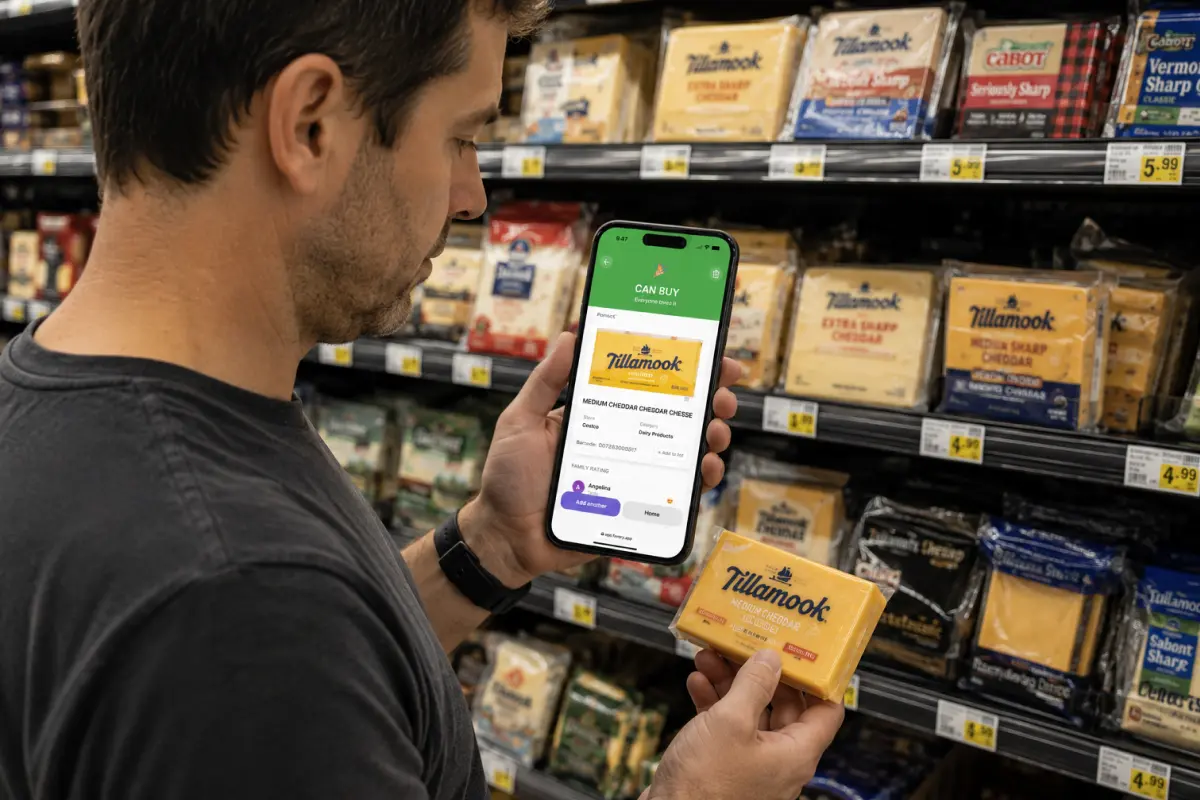
When your partner is at the store staring at a shelf of cheese — they scan. Tillamook block — CAN BUY for our daughter. Pre-sliced — STOP. No phone call needed. Instead of calling home or guessing, they already know what worked last time.
If it's a product your family has already rated, the answer is there immediately. If it's something new — scan it, try it at home, rate it. Your family will never have to guess about that product again.
OurGroceries vs Favory
| Feature | OurGroceries | Favory |
|---|---|---|
| Per-family-member profiles | ❌ | ✅ |
| Product ratings | ❌ | ✅ |
| "Don't buy again" memory | ❌ | ✅ |
| Barcode scanner | ✅ premium | ✅ free |
| Shared grocery list | ✅ | ✅ basic |
| Real-time sync | ✅ | ✅ |
| Alexa / Google Assistant | ✅ | ❌ |
| Apple Watch support | ✅ | ❌ |
| Works across iOS and Android | ✅ | ✅ |
| Free tier | ✅ | ✅ |
Both apps scan barcodes. They use scanning for entirely different purposes. OurGroceries uses it to add items to a shared grocery list. Favory uses it to answer the question: has my family tried this, and did they like it?
The right choice depends less on which app has more features and more on which problem you're actually trying to solve.
How to choose
You need a better shared grocery list: AnyList or Bring!
You need a family organizer with a list included: Cozi.
You're happy with OurGroceries for the shared grocery list but your real problem is that your partner keeps buying the wrong brand, or your kid refuses half of what you bought without thinking: Favory — separately or alongside OurGroceries.
If your biggest frustration isn't forgetting items but buying the wrong ones — Favory may replace the need for a traditional list entirely, or work alongside one.
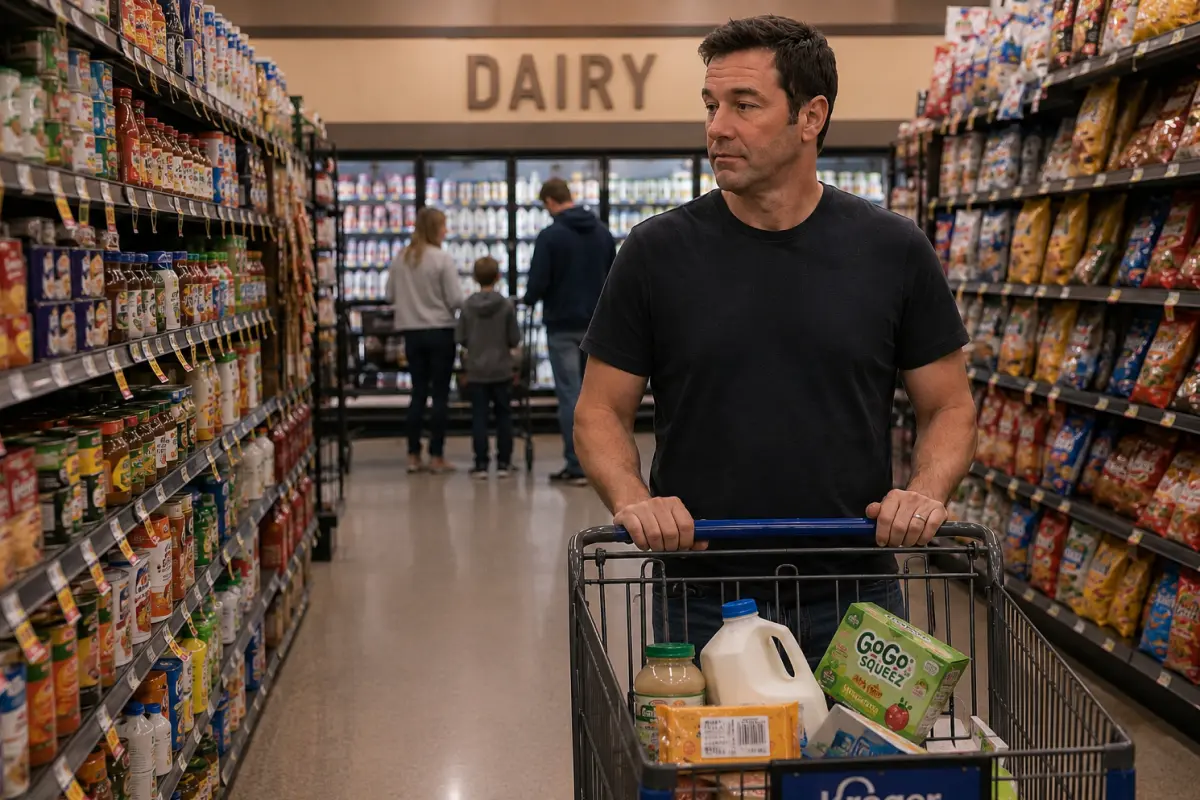
We thought we needed a better shopping list.
What we actually needed was a better family memory.
If your grocery list already works, don't replace it. Keep using it. Just stop relying on it to remember everything your family has learned about food.
Shopping lists remember items.
Favory remembers your family's experience with those items.