
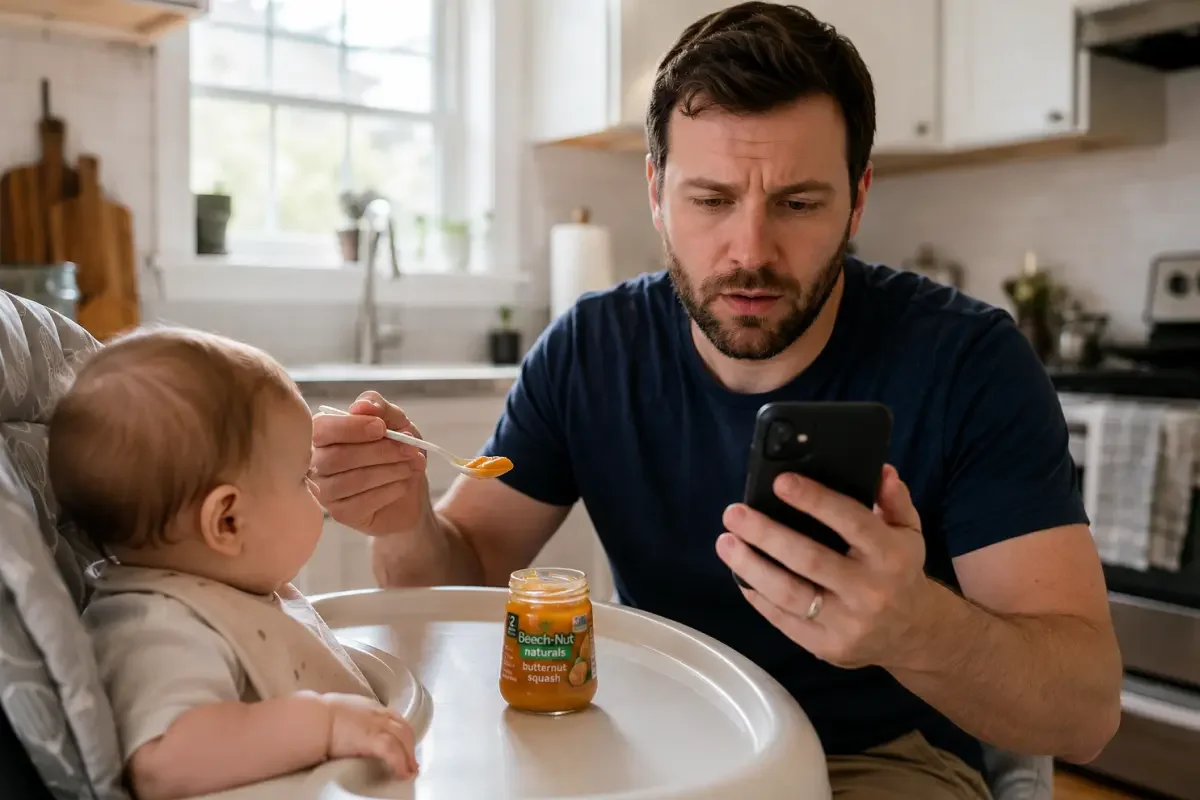
You're standing over a jar of puree at 7am. Butternut squash. Your baby stares at the spoon.
And suddenly you can't remember — have we tried this already? Was last week squash or zucchini? Did she like it or spit it out? Was this even the first time?
There's a notebook somewhere. Or a note on your phone. Or that printable food diary from the pediatrician's office that you taped to the fridge and filled out for exactly three days.
Most parents start with good intentions. A notebook, a printable chart, or a baby food tracker app. A few weeks later life gets busy and the records stop. My first kid was no different: a perfect log for two weeks, then a sleepless night, exhaustion, and the whole thing turned into guesswork.
That's the problem with tracking baby food: it's not hard to start. It's nearly impossible to keep going long enough for it to actually become useful.
The moment you need the information — and it's already gone
Fast-forward a year.
Your toddler is eighteen months old. She suddenly stops eating everything except crackers and pasta. Classic phase — every parent goes through it.
And there you are in the kitchen, trying to remember: which vegetables did she actually enjoy six months ago? Which texture worked — puree, finger foods, or chunks? What did she reject once but later accept?
That's exactly when most feeding logs are already gone. The notebook is lost. The printable got tossed out back in the summer. The baby food tracker app got abandoned because "we already introduced everything."
The information that would save you a week of stress right now — it existed. You wrote it down yourself. Just not somewhere you could find a year later.
The problem isn't that you didn't know. The problem is that the system was built for the food-introduction stage — not for real life after it. Most feeding logs and baby food journals end exactly where the real need begins.
That's the problem that led us to build a food tracker differently. More on that below.
Why most baby food trackers stop too early
Open any baby food tracker — app or printable. Most are built around one thing: allergies.
Introduce a food, wait 3 days, watch for a reaction, repeat. Logical and important — allergies are real. But this system is designed for the first few months of starting solids. For the window when you're introducing one thing at a time and tracking food introduction carefully.
And after that? The tracker did its job and gets closed. That's where the real amnesia begins. Because what you forget isn't "was there an allergy to carrots." It's "did she even like carrots, and in what form."
What's actually worth remembering
Allergies are safety. Important, but not the whole picture.
Here's what fades from memory first — and what's on no printable chart:
What your child actually liked
Not "tolerated without a reaction" — but "ate happily and asked for more." These are different things. Broccoli can be allergy-free and still end up on the floor every single time.
In what form
The same apple: puree — eats it, chunks — spits it out. Or the other way around. With baby-led weaning so common now, texture matters as much as flavor: puree, finger foods, or chunks all land differently.
How many times you offered it
This is the one almost nobody thinks about. A new flavor sometimes needs to be offered 8–10 times before a baby accepts it. But who's counting? Without a record, you give up after the third try and decide "she doesn't eat this" — when really you just never reached the eighth.
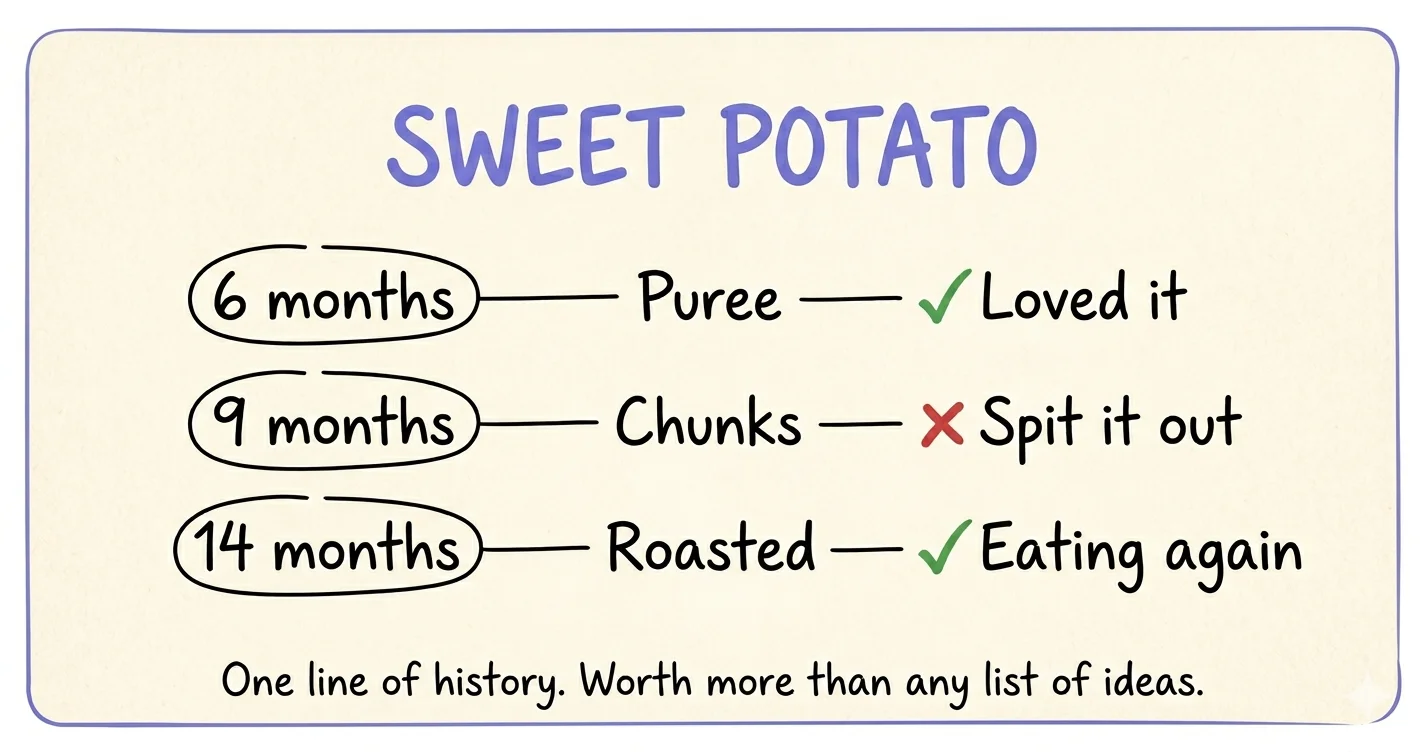
Here's what that looks like in practice. One real entry:
Sweet potato. 6 months. Puree — loved it, ate eagerly. Tried again as chunks at 9 months — spit it out. Came back to it roasted at 14 months — eating it again.
One line of history. But when your child is two and you have no idea what to put on the plate — that line is worth more than any article full of ideas.
The connection I noticed
In our family, foods accepted during infancy often turned out to be easier to reintroduce later. It's not a rule and it's not science — just something I noticed across three kids. But remembering those early wins helps when your toddler's eating habits shift and picky eating sets in.
A child who liked sweet potato puree will probably accept it roasted a year later more easily. Early food acceptance doesn't lock anything in — but those first foods stay familiar, and you have somewhere to start instead of guessing from scratch.
The catch is that this connection only works if you remember the early history once your child is older. And you don't — because the log ended at 6 months.
That's why tracking baby food shouldn't end when starting solids ends. First foods are the beginning of your child's food history, not a separate stage you can forget.
How to track it (and with what)
There are plenty of options. Some parents use Notes on their phone. Some use a Google Sheet. Some print a feeding chart off Pinterest. They all work — for a while.
The problem isn't the tool. It's that most of them are built only for the solids stage and don't survive the move to table food. Notes turn into chaos. The spreadsheet goes stale. The chart gets lost.
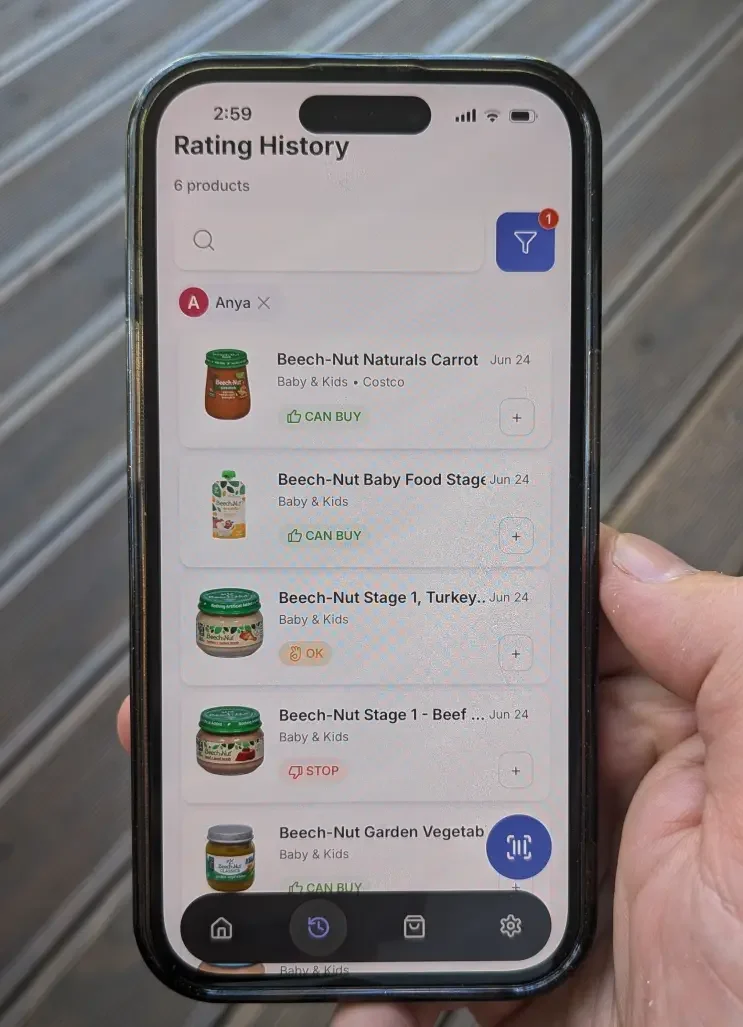
With our third kid we do it differently — we use the same tool we use for the older kids. I scan a jar of puree or enter a food, rate it for the baby the same way as for the older ones: liked it, neutral, rejected. I add a note about texture if needed.
The difference is that this record won't disappear in a month. When we're planning meals, shopping, or working through another picky phase, I can look back at years of food history instead of guessing. Not a separate "baby tracker" feature — a memory that grows with the child.
If I were choosing a baby food tracker again
If I had to pick a baby food tracker app from scratch today, I'd look at only four things.
Does it work past the solids stage
If the app is focused only on "the first 50 foods," you'll abandon it once your baby gets through them. Look for something that grows with the child — from first foods to the dinner table.
Does it capture preferences, not just safety
Allergies matter, but "liked it / didn't" is what you'll use every day for years.
Is it fast
With a baby in your arms you have one free hand. If logging takes more than 10 seconds, you won't do it. Scanning a barcode beats typing into a food diary.
Is it accessible to both parents
Whoever feeds should be the one who records. If the feeding log lives in one person's head, it's lost the moment the other parent takes over.