
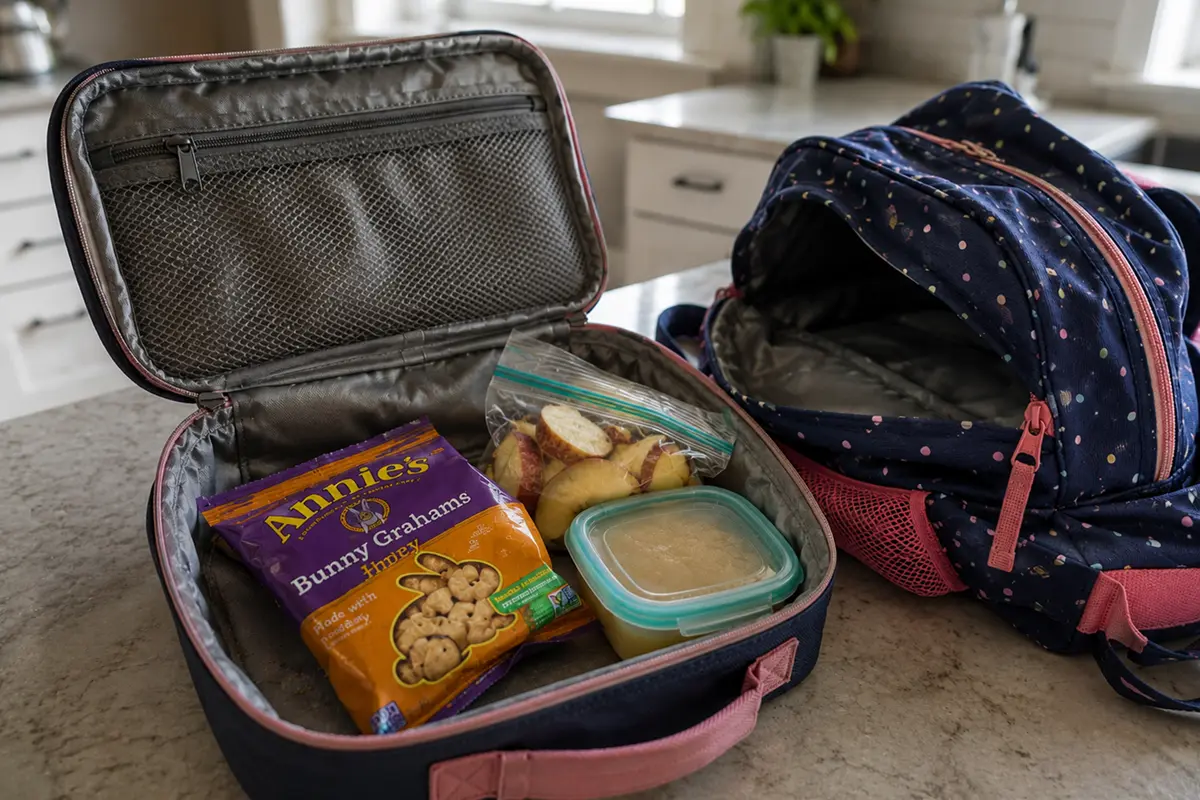
My daughter spent six hours at school that day without eating a single thing.
Not because she wasn't hungry. Because I bought the wrong crackers.
Same brand. Same flavor. But the box looked different — they'd changed the packaging — and she decided they weren't safe. I found out at pickup when the teacher mentioned it. The lunchbox came home exactly as I'd packed it.
I told myself she'd eat them eventually if she got hungry enough.
She didn't. The next day the lunchbox came back full again.
We argued about it that evening. My partner said maybe we should just pack the same five things every week and stop trying anything new. I said she needs variety. We packed the same crackers again the next morning because we didn't have anything else ready.
They came back untouched.
That's when I started wondering if the problem wasn't the crackers at all.
The problem wasn't that my daughter was difficult. Looking back, the expensive part was never picky eating itself. It was buying school snacks and lunchbox food we already knew wouldn't get eaten — because I couldn't remember what had worked before.
The grocery store is the worst possible place to rely on memory.
You're tired. You're trying to get home. One kid wants to leave, the other wants cereal. You're standing in front of twenty kinds of yogurt trying to remember whether it was the strawberry she liked or the mixed berry, and whether it was that brand or the one with the blue lid. You're not going to remember correctly. You're going to guess.
I guessed. I got it wrong. She spent the day hungry at school.
Why parents keep buying the wrong school snacks
We kept making the same mistakes, just in different forms.
Sometimes it was buying "similar." I'd see Annie's cheddar bunnies next to the Goldfish she usually ate. Same idea, same aisle, slightly lower price. Close enough, I thought. It never was. My son notices things I can't detect — a slightly different texture, a smell I don't register, something about the shape that's off. The bag sat unopened until I finally threw it away.
Sometimes it was buying in bulk. A big box of GoGo Squeez pouches that seemed safe — she'd eaten them for months. She tried one, made a face, and stopped. The formula hadn't changed. She just had. I kept packing them anyway, thinking she'd come around. Three weeks later I threw most of the box away. The teacher had mentioned twice by then that she wasn't finishing her school lunch.
Sometimes it was sending my partner shopping alone. He knew roughly what to get — "those crackers, yellow box." He came back with the right brand but the wrong variety. Our daughter looked at the lunchbox and pushed it away. Nobody's fault. But she sat at school for six hours with nothing she'd eat.
What I didn't understand for a long time was that safe snacks for school aren't a category. They're a list — specific, personal, and different for every kid in the house. What my youngest eats, my older one won't touch. What worked last month might be gone now because the formula changed, or the packaging changed, or for reasons only she understood.
"Brand changed the packaging again and we lost a safe food." They spent two weeks tracking down the old version. Their kid went to school without a snack in the meantime.
That's not a picky eating problem. That's a memory problem.
I started keeping notes after school pickups. What came back in the lunchbox. What disappeared. What she asked for by name on Saturday morning. After a few weeks I had something I hadn't had before: a real picture of what each kid actually ate — not what I hoped they'd eat, not what seemed like a reasonable picky eater lunch, but what reliably made it from the lunchbox into their stomach.
The notes worked. What didn't work was opening three different documents every time I stood in the snack aisle — one hand on my phone, the other holding my son so he wouldn't disappear into the cereal section. A spreadsheet isn't something you navigate with one hand while a four-year-old pulls in the opposite direction.
So the notes became a spreadsheet. Then I realized I couldn't be the only parent doing this — rebuilding the same list from scratch every few weeks because memory doesn't hold that kind of detail. That's what eventually became Favory. You scan a product in the store and see how each family member has rated it — STOP, CAN BUY, or MAYBE. No guessing. No calling home. No buying the wrong lunchbox snacks and finding out six hours later when the box comes back full.
I wasn't making a snack list anymore. I was building a database of foods that actually worked.
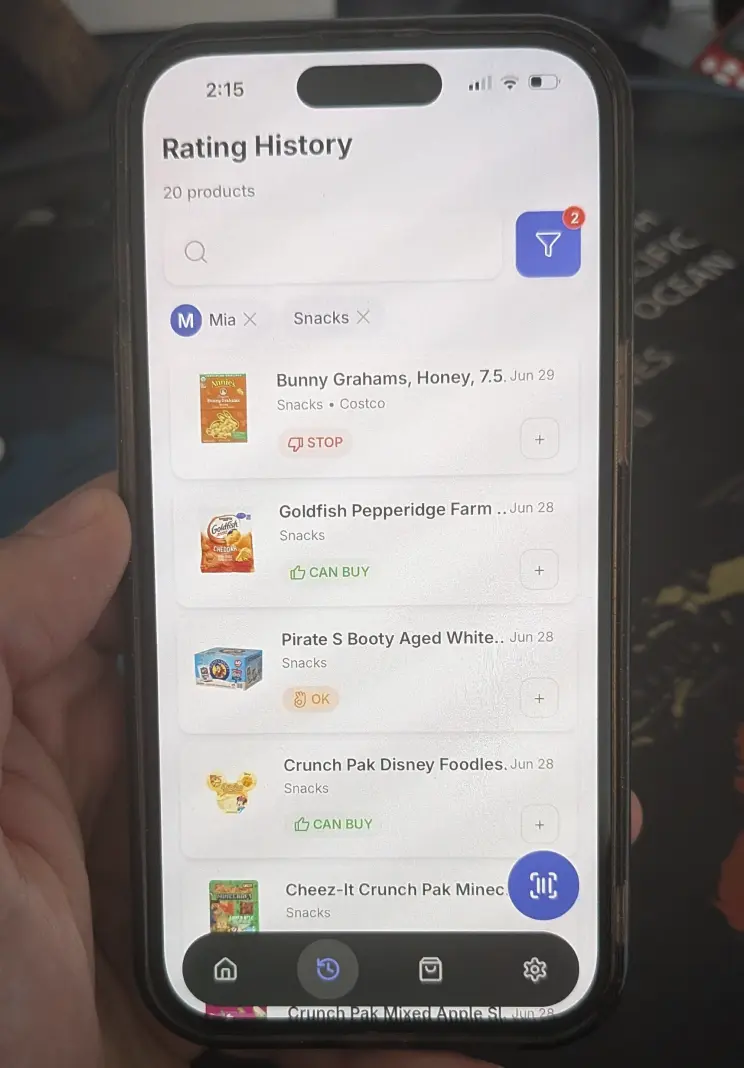
If you want to start somewhere
Pick five products you already know. Three your kid reliably eats at school. Two that came back untouched. Add them after this week's grocery run.
Ask your kid one question after school: "Did you eat your snack today?" One answer. One update.
In a month, your partner can shop alone and get it right. Because the list exists somewhere other than your head.